CURRENT AFFAIRS | 30 JUNE 2026
As António Guterres approaches the end of his second and final term on 31 December 2026, the United Nations is in the midst of one of the most consequential leadership transitions in its 80-year history. The selection process for the tenth Secretary-General formally began on 25 November 2025, drawing six nominees from four continents — and generating intense debate over the twin imperatives of geographic rotation and gender representation, the latter never yet fulfilled in the UN’s history.
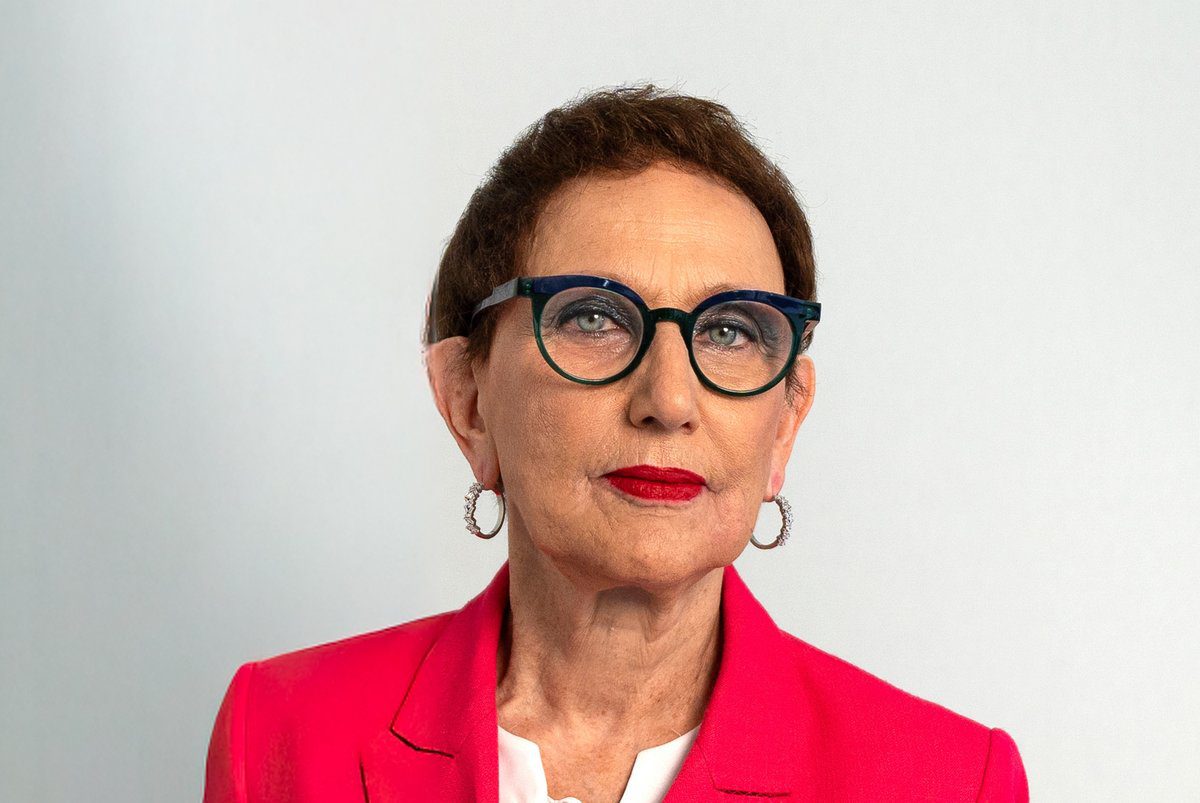
The 2026 race is being watched with extraordinary attention because, for the first time, strong female candidates from Latin America are among the frontrunners: former Chilean president Michelle Bachelet (who later withdrew on 25 March 2026) and Rebeca Grynspan Mayufis of Costa Rica (current UNCTAD Secretary-General) have galvanised a global campaign for the first woman to lead the United Nations. The remaining candidates as of 30 June 2026 include Rafael Mariano Grossi of Argentina (current IAEA Director-General), Macky Sall of Senegal, María Fernanda Espinosa Garcés of Ecuador, and Carolyn Rodrigues Birkett of Guyana. Interactive dialogues — public hearings where candidates presented their visions and answered questions from member states and civil society — were held on 21-22 April and 15-18 June 2026.
Article 97: “The Secretariat shall comprise a Secretary-General and such staff as the Organisation may require. The Secretary-General shall be appointed by the General Assembly upon the recommendation of the Security Council.” This single sentence contains the entire formal mechanism: a two-step process where the UNSC recommends and the UNGA appoints.
Article 98: The Secretary-General “shall act in that capacity in all meetings of the General Assembly, of the Security Council, of the Economic and Social Council, and of the Trusteeship Council, and shall perform such other functions as are entrusted to him by these organs.” This defines the SG as the UN’s chief administrative officer across all principal organs.
Article 99: Perhaps the most significant power — “The Secretary-General may bring to the attention of the Security Council any matter which in his opinion may threaten the maintenance of international peace and security.” Article 99 transforms the SG from a bureaucrat into an independent political actor with the authority to proactively raise threats on the world’s most powerful diplomatic stage.
The P5 Veto in the UNSC Recommendation: While Article 97 requires only a “recommendation” from the Security Council, the council’s procedural rules treat this as a substantive matter — meaning any of the five permanent members (US, UK, France, Russia, China) can veto a candidate. In practice, the UNSC holds informal “straw polls” to identify a consensus candidate before a formal vote, making P5 preference the decisive filter before the UNGA ever votes.
Six Principal Organs of the UN: General Assembly (GA), Security Council (UNSC), Economic and Social Council (ECOSOC), International Court of Justice (ICJ), Secretariat, and the Trusteeship Council (inactive since 1994 when Palau became independent).
The convention of geographic rotation — unwritten but politically powerful — has informally guided the selection since 1971, alternating between broad regional groupings. The sequence has broadly been: Europe (Trygve Lie, Norway; Dag Hammarskjöld, Sweden) → Asia (U Thant, Burma/Myanmar) → Austria (Kurt Waldheim) → Peru (Javier Pérez de Cuéllar) → Egypt (Boutros Boutros-Ghali) → Ghana (Kofi Annan) → South Korea (Ban Ki-moon) → Portugal (António Guterres). With Latin America and Eastern Europe both making strong cases, P5 arithmetic — particularly Russia’s and China’s preferences — will ultimately determine the outcome.
The UN Secretary-General selection process is a perennial CLAT GK topic, often appearing as both standalone factual questions and as the basis for Reading Comprehension passages on multilateralism and institutional design. Key test-ready points:
- Article 97 vs popular misconception: CLAT repeatedly tests whether students know it is the UNGA that appoints (not elects) the SG, upon the UNSC’s recommendation — not the other way around.
- P5 veto on SG selection: The fact that the Security Council’s recommendation is a substantive matter (subject to P5 veto) is a crucial legal-reasoning point — it means geopolitics, not merit alone, determines the world’s top diplomat.
- Article 99 significance: The SG’s independent right to raise peace-and-security threats before the UNSC under Art. 99 is rare but powerful; Dag Hammarskjöld invoked it during the 1960 Congo crisis. CLAT RC passages on the SG’s role frequently hinge on this provision.
- All 9 Secretary-Generals in order: Trygve Lie (Norway) → Dag Hammarskjöld (Sweden) → U Thant (Myanmar) → Kurt Waldheim (Austria) → Javier Pérez de Cuéllar (Peru) → Boutros Boutros-Ghali (Egypt) → Kofi Annan (Ghana) → Ban Ki-moon (South Korea) → António Guterres (Portugal, 2017–2026).
- “1 for 7 Billion” campaign: A global civil society push (launched around 2015) demanding that the SG selection be transparent, merit-based, and open to women — directly influencing the structured “interactive dialogues” now institutionalised in the 2026 process.
- First woman SG: A recurring CLAT GK point — no woman has yet served as SG; this fact is directly relevant if Grynspan or Espinosa win in 2026.
The interactive dialogues introduced in 2016 (for the 2017 selection of Guterres) and now further institutionalised represent a significant democratisation of the process. Candidate hearings allow member states beyond the P5 — including India — to assess candidates publicly. India’s diplomatic interest in the selection is significant: a SG sympathetic to India’s multi-polar world vision and to Global South priorities (climate finance, debt relief, UN Security Council reform) aligns with New Delhi’s strategic interests. India has consistently advocated for UNSC expansion, seeking a permanent seat — a reform that the incoming SG’s political will can accelerate or stall.
| Item | Detail |
|---|---|
| UN founded | 24 October 1945 (UN Day) |
| UN Charter articles on SG | Articles 97, 98, 99 |
| SG appointment mechanism | UNGA appoints on UNSC recommendation (P5 veto applies) |
| Current SG (2017–2026) | António Guterres (Portugal) |
| Guterres’s term ends | 31 December 2026 |
| Selection process began | 25 November 2025 |
| Interactive dialogues | 21-22 April 2026 and 15-18 June 2026 |
| Active candidates (June 2026) | Grossi (Argentina), Grynspan (Costa Rica), Sall (Senegal), Espinosa (Ecuador), Rodrigues Birkett (Guyana) |
| First female SG? | Not yet — all 9 SGs have been men |
| Principal organs of the UN | GA, UNSC, ECOSOC, ICJ, Secretariat, Trusteeship Council (6 total) |
| Trusteeship Council status | Inactive since 1994 (last trust territory Palau became independent) |
The incoming Secretary-General will inherit a world of compounding crises — ongoing armed conflicts, accelerating climate disruption, AI governance gaps, and a fractured multilateral financial architecture. The UN Charter grants the SG limited direct power, but immense “soft power”: the bully pulpit of Article 99, the convening authority of the world’s most legitimate platform, and the moral credibility of being “the world’s servant.” For CLAT aspirants, grasping the institutional design of the UN — the interplay between the elected UNGA and the permanent-member-dominated UNSC — is essential both for GK questions and for legal reasoning passages that examine how international institutions balance democracy with power.
All 9 UN Secretary-Generals in order — “Lie Has U-Waldheim, Pérez Beats Annan, Ban Guterres”:
1. Trygve Lie (Norway, 1946–52)
2. Dag Hammarskjöld (Sweden, 1953–61)
3. U Thant (Myanmar, 1961–71)
4. Kurt Waldheim (Austria, 1972–81)
5. Javier Pérez de Cuéllar (Peru, 1982–91)
6. Boutros Boutros-Ghali (Egypt, 1992–96)
7. Kofi Annan (Ghana, 1997–2006)
8. Ban Ki-moon (South Korea, 2007–16)
9. António Guterres (Portugal, 2017–26)
For the Charter articles: “97 = Appoint; 98 = Act; 99 = Alert” — Article 97 governs appointment, Article 98 what the SG does (act in meetings), Article 99 lets the SG alert the Security Council to threats.
6 Principal Organs — “STIGE-C”: Secretariat, Trusteeship Council, ICJ, General Assembly, ECOSOC, Cecurity Council. Note the Trusteeship Council has been inactive since 1994 — a favourite trick question.
Test Yourself — Quick Quiz
Practice Quiz — 10 CLAT-Style Questions
Click an option to reveal the answer and explanation.