CURRENT AFFAIRS | MAY 9, 2026
📰 What Happened
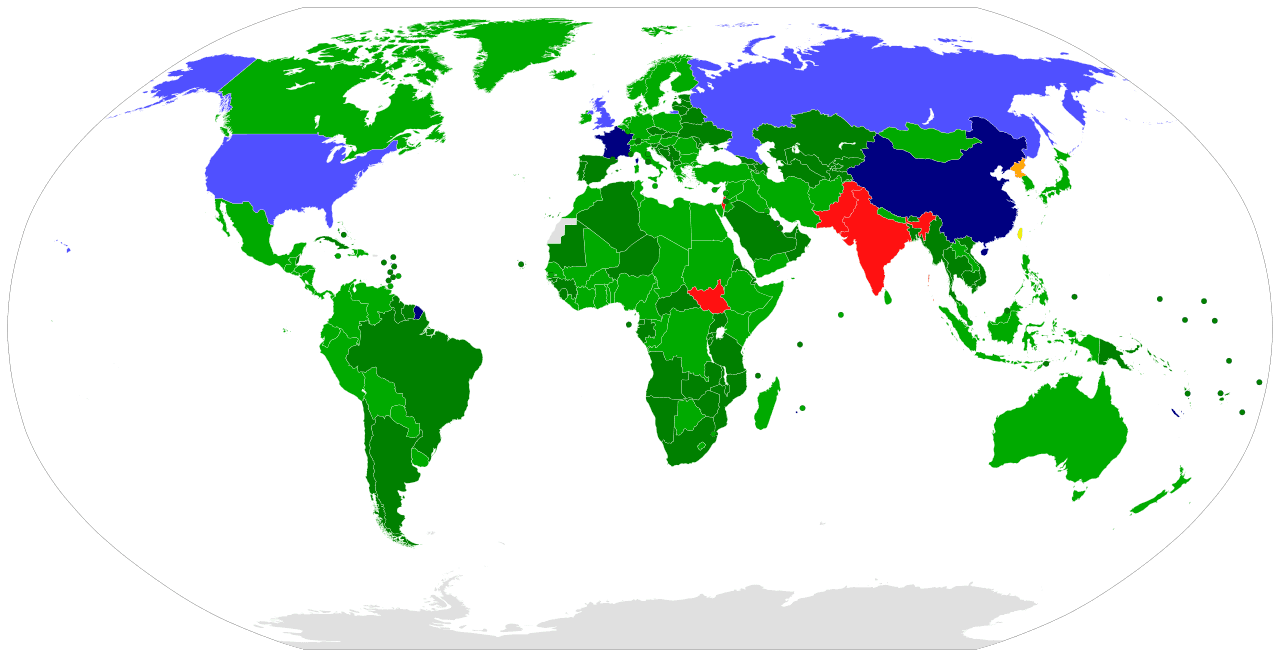
The Tenth NPT Review Conference is underway at UN Headquarters, New York. Restoring consensus between nuclear and non-nuclear armed states hangs in the balance amid longstanding NPT member and US allies (Japan, South Korea) re-examining their nuclear weapons capability — and the West’s pivot from non-proliferation to counterproliferation. As Op-Ed contributors at OP Jindal University noted on Friday’s editorial page, the 2003 Iraq invasion (justified on disputed WMD intelligence) and the 2018 US withdrawal from the JCPOA have eroded faith in the non-proliferation regime and undermined Article IV — the right of states to peaceful nuclear technology under safeguards.
🎯 Why It Matters for CLAT 2027
India is not a party to the NPT (which it calls ‘discriminatory’) but received a Nuclear Suppliers Group waiver in 2008 enabling civil nuclear cooperation under the Indo-US Nuclear Deal. India’s posture turns on a ‘No First Use’ doctrine, a credible minimum deterrent, and a separate civil-military nuclear establishment. The RevCon’s outcome — whether it produces a final consensus document or fails as in 2015 and 2022 — will signal whether the Non-Proliferation regime can survive Iran’s 60% enrichment, North Korean tests, and Trump-era ‘maximum pressure’ tactics that incentivise threshold states to weaponise.
CLAT Tip: India’s ‘NPT outsider but NSG insider’ status is examiner gold — frame India’s position using the 1974 Smiling Buddha test, 1998 Pokhran-II, and 2008 NSG waiver as a single arc.
📚 Key Concepts to Remember
- NPT 1968 (entered into force 1970) — three pillars: (i) non-proliferation, (ii) peaceful use, (iii) disarmament.
- Article IV NPT — ‘inalienable right’ to peaceful nuclear technology subject to IAEA safeguards.
- Article VI NPT — disarmament obligation on Nuclear Weapon States (P-5).
- Article X NPT — right to withdraw with 3 months’ notice (DPRK invoked it in 2003).
- IAEA Comprehensive Safeguards Agreement (INFCIRC/153) + Additional Protocol 1997 (INFCIRC/540) — verification regime.
- Counterproliferation vs Non-proliferation — the former uses sanctions/military force; the latter relies on diplomacy/safeguards.
- Indo-US 123 Agreement (2008), NSG Waiver (2008), India’s Separation Plan.
⚖️ Legal Angle & Precedents
Treaty on the Non-Proliferation of Nuclear Weapons (1968); Treaty on the Prohibition of Nuclear Weapons (TPNW, 2017 — opposed by all P-5); Comprehensive Nuclear-Test-Ban Treaty 1996 (India not a signatory).
Mnemonic: NPT-Trinity — Non-proliferate, Peace-fuel, Tear-down (Articles I-II, IV, VI).
🧠 Test Yourself — 10 MCQs
Take the quiz below to lock in today’s CLAT-grade current affairs coverage.
Practice Quiz — 10 CLAT-Style Questions
Click an option to reveal the answer and explanation.