CURRENT AFFAIRS | 27 JUNE 2026
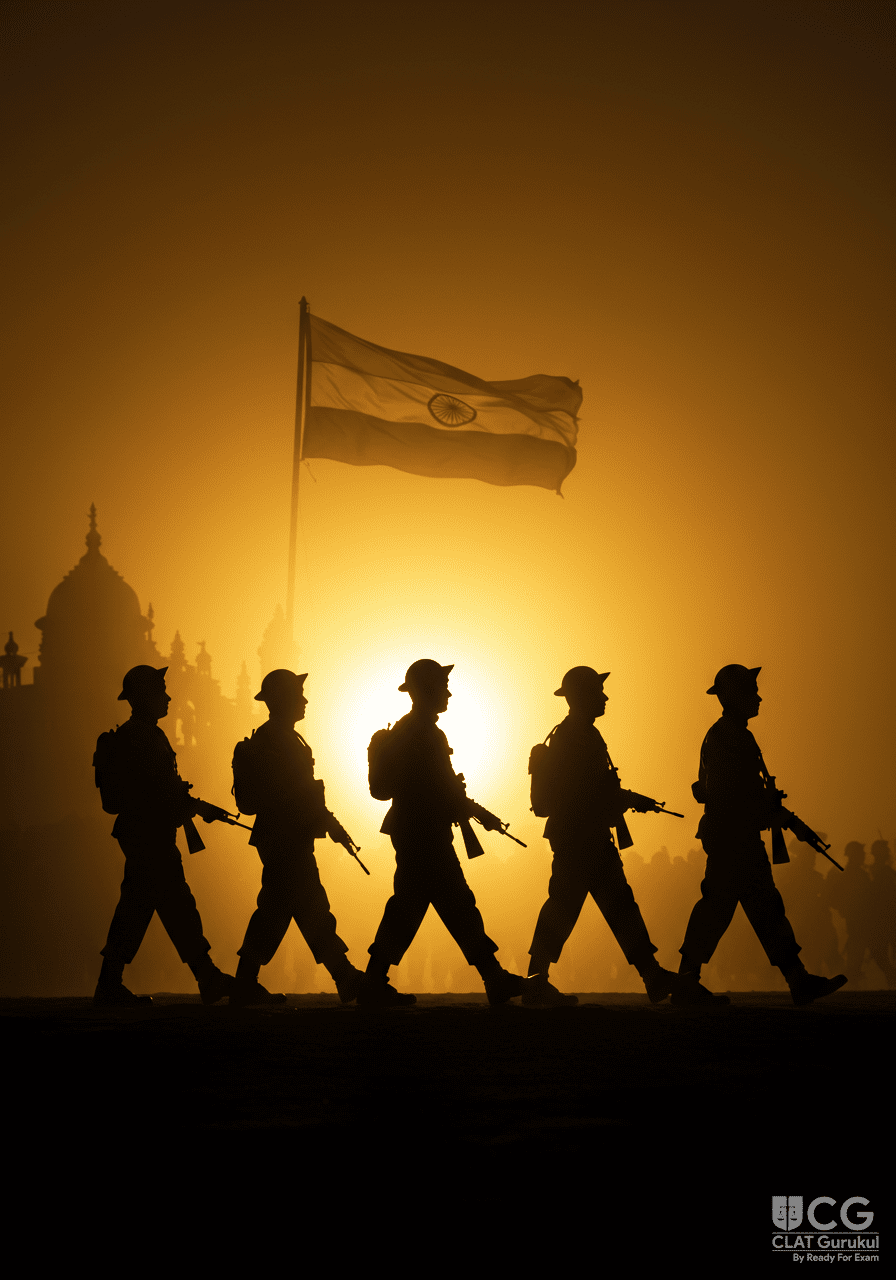
For the first time, India has made public the names of six Armed Forces personnel killed in action during Operation Sindoor (May 2025), with their names inscribed at the National War Memorial and on the Roll of Honour. The release was accompanied by gallantry honours — most notably the Vir Chakra (posthumous) to Rifleman Sunil Kumar of the 4th Battalion, Jammu & Kashmir Light Infantry. For CLAT, this is a high-value defence and institutions topic, especially the hierarchy of gallantry awards.
What Happened
Naming the fallen is significant: it converts an operation into a matter of public record and national memory. Alongside Rifleman Sunil Kumar’s Vir Chakra, Sergeant Surinder Kumar was awarded the Vayu Sena Medal. President Droupadi Murmu, as Supreme Commander of the Armed Forces, presented the Vir Chakra on 8 June. Most Army casualties during Operation Sindoor occurred in Jammu & Kashmir.
The story is a reminder of how India honours valour through a carefully tiered award system — and how those tiers split between wartime and peacetime bravery. Aspirants who confuse the two lists lose easy marks.
The decision to name the fallen also carries a quieter institutional significance. For years, details of personnel killed in sensitive operations were often withheld, leaving families and the public without formal acknowledgement. Inscribing the six names at the National War Memorial — a structure built specifically to honour those who died in action since independence, with the perpetually-lit Amar Jawan flame relocated there — converts private sacrifice into a permanent public record. Note too the constitutional logic: gallantry awards are conferred in the name of the President, who is the ceremonial head of the Armed Forces, but the operational chain of command runs through the elected government and the service chiefs. This separation of ceremonial and operational command is a recurring theme in Indian civil-military relations and a favourite of GK paper-setters.
Institutional Framework
Gallantry awards are conferred by the President of India, who under Article 53 is the Supreme Commander of the Armed Forces (the title of Commander-in-Chief of the respective services rests with the President per Article 53(2)). The awards were instituted by Presidential warrant after independence. The National War Memorial (New Delhi, inaugurated 2019) commemorates personnel who died in action; the Roll of Honour records their names. These honours are distinct from civilian awards such as the Bharat Ratna and Padma series.
Key Facts
| Operation | Operation Sindoor (May 2025) |
| Names released | Six personnel killed in action (first time public) |
| Vir Chakra (posthumous) | Rifleman Sunil Kumar, 4 Bn J&K Light Infantry |
| Vayu Sena Medal | Sergeant Surinder Kumar |
| Presented by | President Droupadi Murmu, on 8 June |
| Memorial | National War Memorial & Roll of Honour |
| Most casualties | Jammu & Kashmir |
The CLAT Angle
The single most testable fact here is the award hierarchy. Wartime gallantry: Param Vir Chakra > Maha Vir Chakra > Vir Chakra. Peacetime gallantry: Ashoka Chakra > Kirti Chakra > Shaurya Chakra. Service medals include the Sena Medal (Army), Nao Sena Medal (Navy) and Vayu Sena Medal (Air Force). Know that these are gallantry awards, separate from civilian honours (Bharat Ratna, Padma Vibhushan/Bhushan/Shri).
Mnemonic
Wartime: “PVC > MVC > VrC” (Param > Maha > Vir). Peacetime: “AKS” — Ashoka > Kirti > Shaurya. Remember the parallel: the first in each list (Param Vir Chakra / Ashoka Chakra) is the highest.
Why This Matters for CLAT
Defence GK appears every year, and the gallantry-award hierarchy is a perennial favourite because it is precise and easy to test with one-line MCQs. Pair it with the constitutional fact that the President is Supreme Commander (Article 53) and the institutional fact of the National War Memorial, and you have a compact, high-yield cluster. The naming of Operation Sindoor’s fallen gives this evergreen topic a fresh 2026 anchor.
Practice Quiz — 10 CLAT-Style Questions
Click an option to reveal the answer and explanation.