CURRENT AFFAIRS | 26 JUNE 2026
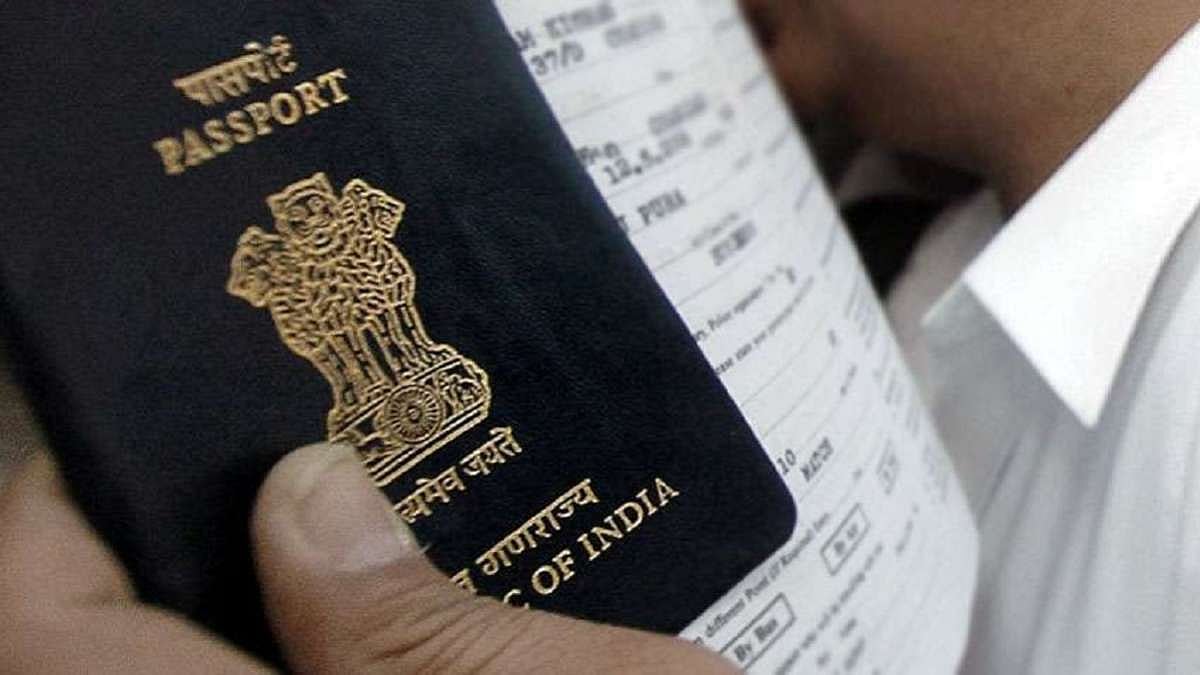
On Passport Seva Divas, the Ministry of External Affairs (MEA) made a clarification that cuts to the heart of a recurring legal-reasoning theme: an Indian passport is primarily a travel document, not a stand-alone proof of citizenship. The Constitution (Articles 5 to 11) and the Citizenship Act, 1955 define who is an Indian citizen, but neither identifies any single document as conclusive proof of that status.
Citizenship is a legal status that arises from facts — birth, parentage, domicile or naturalisation. Documents such as a passport, Aadhaar, voter ID, PAN or birth certificate are merely evidence pointing to those facts; they do not, by themselves, create or conclusively prove citizenship. The clarification is especially significant amid the Election Commission’s Special Intensive Revision (SIR) of electoral rolls and the recurring debate over the NRC.
Acquisition versus proof of citizenship
The key distinction every CLAT aspirant must master is between acquiring citizenship and proving it. The Citizenship Act, 1955 lays down four modes of acquisition: by birth, by descent, by registration and by naturalisation. Whether a person holds a particular document is a separate question of evidence entirely.
Constitutional & Legal Framework
- Article 5 — citizenship at the commencement of the Constitution (domicile + birth/parentage/residence).
- Articles 6 & 7 — rights of citizenship of persons who migrated to/from Pakistan.
- Article 8 — citizenship of persons of Indian origin residing abroad (PIOs).
- Articles 9 & 10 — voluntary acquisition of foreign citizenship; continuance of rights.
- Article 11 — Parliament’s power to regulate citizenship by law (source of the 1955 Act).
The landmark cases
In Sarbananda Sonowal v. Union of India (2005), the Supreme Court held that the burden of proving citizenship rests on the individual who claims it, not on the State. In State of Andhra Pradesh v. Abdul Khader (1962), the Court treated a passport as evidence of nationality but not conclusive proof — precisely the principle the MEA reiterated.
Why This Matters for CLAT
Citizenship is one of the most heavily tested CLAT polity + legal-reasoning themes. You must be able to (a) separate modes of acquisition (birth, descent, registration, naturalisation) from proof of citizenship; (b) recall the constitutional Articles (5–11) and the 1955 Act; and (c) apply Sonowal’s burden-of-proof rule to fact-based legal reasoning passages on the NRC, SIR and citizenship verification.
Key Facts at a Glance
| Nature of a passport | Travel document; does NOT by itself create or conclusively prove citizenship |
| Four modes of acquisition | Birth, Descent, Registration, Naturalisation (Citizenship Act, 1955) |
| Citizenship by birth | 1950–1987: born in India; 1987–2004: either parent a citizen; after 2004: one parent citizen & other not an illegal migrant |
| Naturalisation | 12 months continuous residence + 11 of the preceding 14 years (relaxable for distinguished service) |
| Universal citizenship document | None exists; NRC compiled only in Assam |
| Burden of proof | Sonowal (2005): rests on the individual, not the State |
Memory Hook (Mnemonic)
B-D-R-N — Birth, Descent, Registration, Naturalisation: the four doors to Indian citizenship.
Test yourself
Practice Quiz — 10 CLAT-Style Questions
Click an option to reveal the answer and explanation.