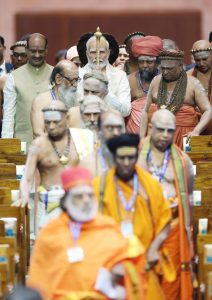

Prime Minister Narendra Modi’s visit to Yogyakarta, Indonesia marked the beginning of India’s effort to help restore the iconic Prambanan Temple — a 9th-century UNESCO World Heritage Site on the island of Java and one of the grandest Hindu monuments in Southeast Asia.
A Temple on the Island of Java
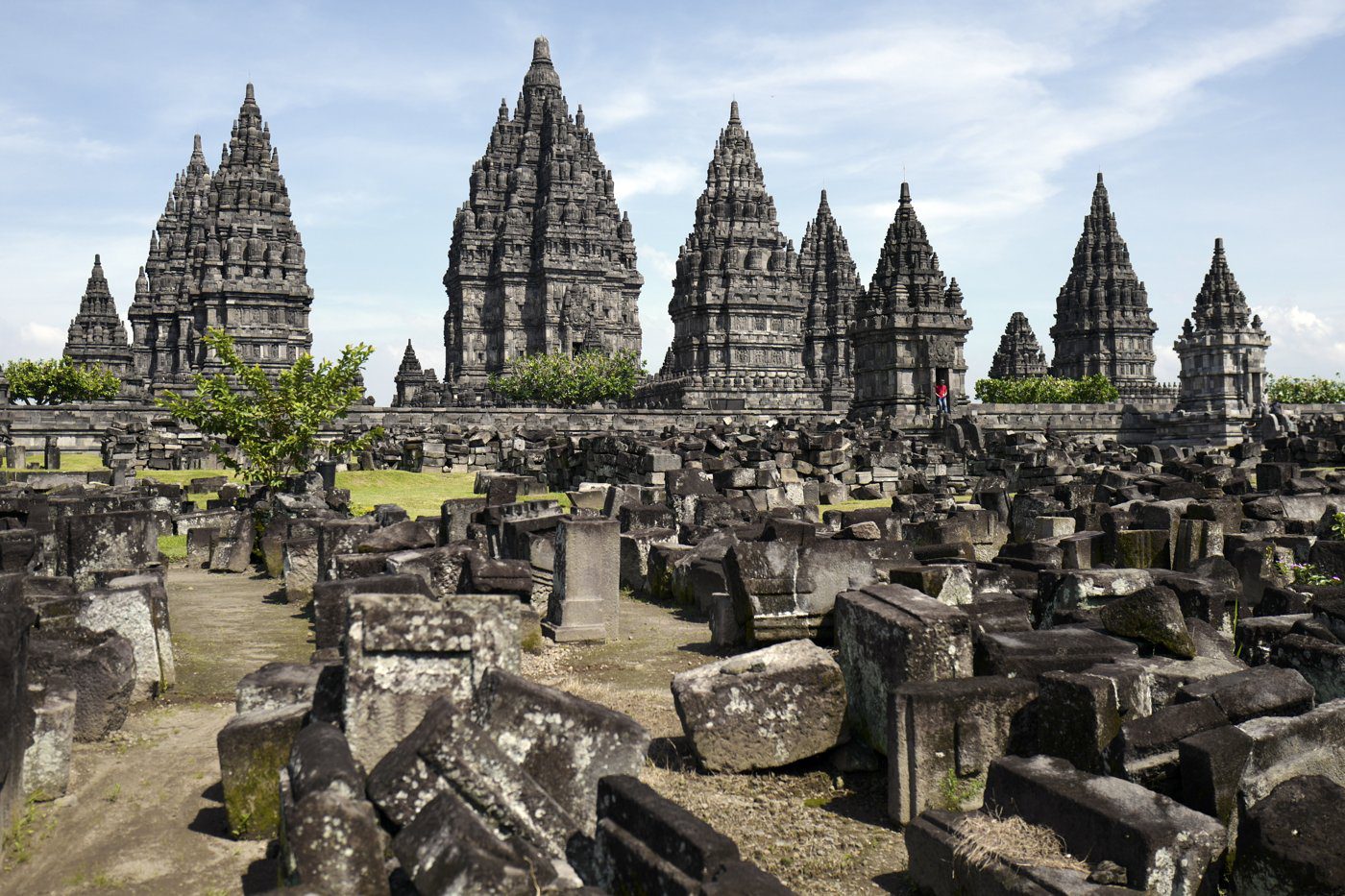
The Prambanan compound — also known as Loro Jonggrang or Candi Prambanan — is a Shaivite Hindu temple complex dedicated principally to the Trimurti, with its tallest shrine devoted to Shiva. Rising in a cluster of soaring, intricately carved towers, it stands among the most important surviving expressions of Hindu architecture beyond the Indian subcontinent. Nearby lie the Buddhist temples of Sewu, Bubrah and Lumbung, so that Hindu and Buddhist monuments share a single sacred landscape.
India’s offer to assist in the temple’s restoration turns a heritage site into an instrument of diplomacy, reaffirming the deep and ancient cultural links between India and the Indonesian archipelago.
Kingdoms and Dynasties
Prambanan is associated with the Mataram Kingdom of central Java and with two dynasties whose names recur across Southeast Asian history: the Sanjaya and the Sailendra. Construction of the complex is dated to around 856 CE and is linked to King Rakai Pikatan. The Sailendra dynasty is often connected with the great Buddhist monument of Borobudur, while the Sanjaya line is associated with the Shaivite tradition that produced Prambanan.
The proximity of Hindu Prambanan to Buddhist Sewu, and the interlinked histories of these dynasties, has led many historians to read the site as a symbol of Hindu–Buddhist coexistence — a syncretic religious culture in which the two traditions flourished side by side rather than in conflict.
Abandonment and Burial
The temple did not remain a living centre of worship for long. Around 930 CE the Mataram court shifted from central to East Java, and Prambanan was gradually abandoned. Historians attribute the move to a combination of factors, possibly including an eruption of the nearby volcano Mount Merapi and internal political conflict.
Left unattended, the great towers succumbed to earthquakes and the tropical climate. Over the centuries the complex collapsed and was buried under volcanic debris and dense vegetation, its stones scattered and its grandeur lost to memory — though never entirely forgotten. The 15th-century Javanese court poet Mpu Tanakung noted the ruins, keeping a thread of remembrance alive even as the jungle reclaimed them.
Rediscovery and Documentation
The modern “rediscovery” of Prambanan belongs to the era of colonial surveying. During the British interregnum in Java (1811-1816), Thomas Stamford Raffles served as Lieutenant-Governor. A keen student of Javanese antiquities, Raffles commissioned surveys of the island’s monuments, and figures such as Colin Mackenzie were involved in documenting the ruins.
This documentation drew scholarly attention to the site, though systematic conservation lay far in the future. The colonial surveys are a reminder that the “rediscovery” of ancient monuments often coincided with imperial administration and its appetite for cataloguing the lands it governed.
The Long Road to Reconstruction
Serious reconstruction of Prambanan unfolded across the turbulent middle of the 20th century, spanning the Second World War and Indonesia’s struggle for independence. Rebuilding a collapsed stone temple is painstaking work: engineers and archaeologists must identify original stones, fit them like a vast three-dimensional puzzle, and replace only what is missing. The restoration of the main Shiva temple was completed in 1953, and work on the wider complex has continued in phases ever since. The site was inscribed on the UNESCO World Heritage List in recognition of its outstanding universal value.
Greater India and Cultural Diplomacy
Prambanan sits within the story of what historians once called “Greater India” — the spread of Indian religious, artistic and political ideas across Southeast Asia through trade and cultural exchange, producing “Indianised” kingdoms from Cambodia’s Angkor to Java. These were not colonies but sovereign realms that adapted Hindu and Buddhist ideas to local genius, creating monuments such as Angkor Wat, Borobudur and Prambanan.
India’s offer to help restore Prambanan is a modern act of cultural diplomacy and soft power — using shared heritage rather than hard power to build goodwill. India has undertaken similar restoration work at Angkor Wat in Cambodia and at temples in other neighbouring countries, positioning heritage conservation as a pillar of its foreign policy in the Indo-Pacific.
The CLAT Angle
For CLAT aspirants, Prambanan is a classic General Knowledge and Current Affairs story that rewards a candidate comfortable moving between history, culture and international relations. On the static side, be ready with the essentials: Prambanan is a 9th-century Shaivite Hindu complex on Java, dated to around 856 CE, linked to the Mataram Kingdom and the Sanjaya and Sailendra dynasties, and it is a UNESCO World Heritage Site. Note the contrast with Borobudur (Buddhist) and the theme of Hindu–Buddhist syncretism, which passages love to highlight.
The current-affairs hook — India’s role in restoration — connects to broader themes of cultural diplomacy, soft power and the concept of “Greater India” or the Indianised kingdoms of Southeast Asia. Expect passages to test your grasp of what UNESCO World Heritage status means and why heritage restoration serves diplomatic goals. A well-prepared candidate will also recall Thomas Stamford Raffles as the British Lieutenant-Governor of Java (1811-16) associated with documenting Javanese antiquities. The lesson for exam strategy is that a single monument can anchor questions across history, religion and foreign policy — so read such stories for their connective themes, not merely their dates.
Test Yourself — Daily Quiz
Practice Quiz — 10 CLAT-Style Questions
Click an option to reveal the answer and explanation.