CURRENT AFFAIRS | 24 JUNE 2026
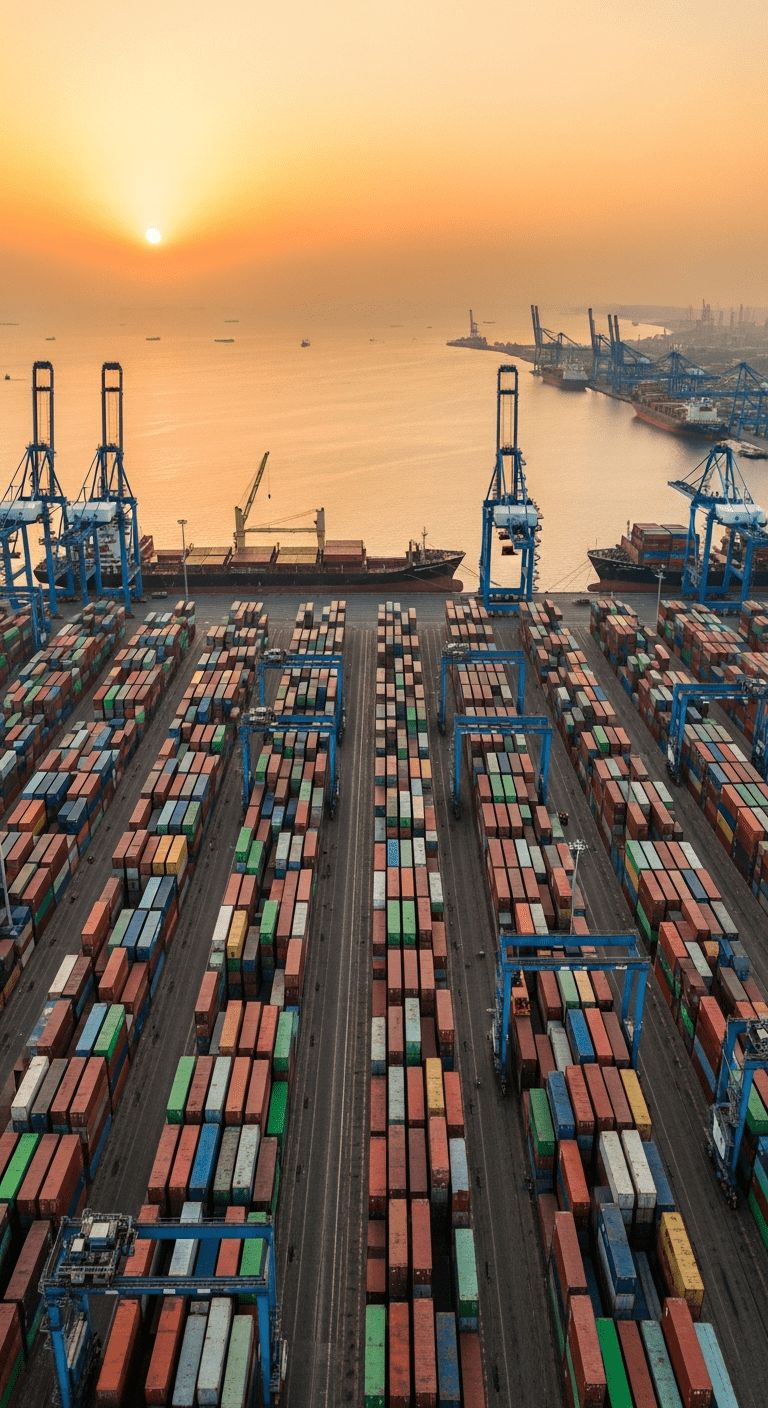
A government review marking 12 years of maritime transformation has put the spotlight back on Sagarmala, India’s flagship port-led development programme. The review showcases more than 7,100 km of port-connectivity infrastructure, a 59% jump in cargo handled, and a fresh wave of legislation — including the Indian Ports Act, 2025 and the Merchant Shipping Act, 2025 — that retires colonial-era statutes. Taken together, it is a story of a flagship scheme maturing alongside the laws that govern it.
Sagarmala and the vision documents
Launched as a port-led development programme, Sagarmala aims to harness India’s long coastline — one of the longest in the world — to drive economic growth. The logic is that ports are not just gateways for trade but engines for industrial clusters, coastal shipping and job creation in the regions around them. The review pairs the programme with the Maritime India Vision 2030 and the longer-horizon Maritime Amrit Kaal Vision 2047.
Together these documents form a layered roadmap: near-term targets to 2030 and a generational ambition to 2047, all anchored in port modernisation, last-mile connectivity and the integration of waterways into the wider logistics network. For an aspirant, the value lies in seeing how a scheme, a medium-term vision and a long-term vision stack into a single policy architecture.
The performance story
The headline numbers are striking. Total cargo handled at Indian ports rose 59% to 1,668 million metric tonnes, and three Indian ports now sit in the global top 30 of the World Bank’s Container Port Performance Index — a benchmark that ranks ports by how efficiently they move container traffic. Crossing into that top tier signals that Indian ports are closing the gap with the world’s most efficient hubs.
Looking ahead, Vadhvan Port in Maharashtra is being developed to become India’s largest container port. A deep-draught facility of that scale could anchor India as a transshipment hub, reducing the country’s reliance on foreign ports to handle its own cargo — a quiet but significant gain in strategic autonomy.
Behind these headline figures lies a structural shift. For decades, a large share of India’s container cargo was transshipped through ports outside the country, adding cost and time. Building world-class hubs at home keeps that value within India, strengthens supply-chain resilience and supports the wider goal of making the country a manufacturing and export base.
Retiring colonial law
Perhaps the most exam-relevant strand is legislative. Eleven landmark Acts were enacted, among them the Merchant Shipping Act, 2025 and the Indian Ports Act, 2025. These replace the Indian Ports Act, 1908 and the Merchant Shipping Act, 1958 respectively — part of a broader drive to decolonise India’s statute book and modernise its regulatory architecture.
Why does this matter beyond the symbolism? Colonial-era maritime statutes were drafted for a very different era of shipping, with outdated definitions, penalties and procedures. Replacing them allows the law to reflect modern vessel technology, environmental obligations and ease-of-doing-business goals. The pattern — new statute retiring an old colonial one — recurs across Indian law reform, which is exactly why CLAT examiners find it attractive.
Ports as engines of the blue economy
Sagarmala sits within a wider idea known as the blue economy — the sustainable use of ocean resources for economic growth, livelihoods and ecosystem health. Ports are the visible face of this economy, but the programme also touches coastal community development, fisheries, inland waterways and coastal shipping, which moves cargo along the coast rather than overloading road and rail networks.
For an aspirant, the takeaway is to read a scheme like Sagarmala not in isolation but as one piece of a larger design. The combination of a flagship programme, two long-range vision documents and a bundle of modern statutes shows how policy, planning and law are meant to move together. That integrated reading is precisely the skill that current-affairs questions are built to reward.
Constitutional / Legal Framework
The Sagarmala Programme; the Maritime India Vision 2030; the Indian Ports Act, 2025 (replacing the colonial Indian Ports Act, 1908); the Merchant Shipping Act, 2025 (replacing the Merchant Shipping Act, 1958); all under the Ministry of Ports, Shipping and Waterways.
CLAT Angle
It shows a flagship scheme paired with fresh statutes replacing colonial law — a scheme plus legislation combination CLAT rewards.
Exam tip: The Indian Ports Act 2025 and Merchant Shipping Act 2025 replace colonial-era statutes of 1908 and 1958 respectively — part of the law-decolonisation drive.
Key Facts
| Sagarmala: over 7,100 km of port-connectivity infrastructure |
| Total cargo handled up 59% to 1,668 MMT |
| Three Indian ports in the World Bank Container Port Performance Index top 30 |
| Merchant Shipping Act 2025 and Indian Ports Act 2025 replace colonial laws |
| Vadhvan Port (Maharashtra) to become India’s largest container port |
Memory Hook
Sagarmala = ports-led growth; 2025 Acts retire 1908 and 1958.
Sagarmala illustrates a pattern CLAT examiners love: a flagship scheme reinforced by fresh statutes that sweep away colonial-era law. The 12-year review ties together hard numbers — 7,100 km of connectivity, a 59% jump in cargo to 1,668 MMT, three ports in the World Bank top 30 — with a clean legal storyline about modernising the statute book. That blend of data and doctrine is exactly the kind of material that turns into multiple questions from a single news item.
Remember the pairing — the Indian Ports Act, 2025 retires the 1908 Act and the Merchant Shipping Act, 2025 retires the 1958 Act — and you have a ready answer for both the scheme question and the law-decolonisation question. Anchor it to the wider blue-economy idea, and you will be able to handle whichever angle the paper chooses to test.
Practice Quiz — 10 CLAT-Style Questions
Click an option to reveal the answer and explanation.