CURRENT AFFAIRS | 23 JUNE 2026
The world’s most important oil chokepoint has reopened. After weeks of tension, the United States waived sanctions on Iran, the Strait of Hormuz came back to life, tankers resumed sailing, and oil prices cooled — a sharp turn with direct consequences for India’s energy security.
What Happened
The United States waived sanctions on Iran for 60 days from Monday, following the first talks under a nascent US-Iran peace deal and calm returning to Lebanon. The Strait of Hormuz — which Iran had effectively closed — reopened, tanker traffic resumed and global oil prices fell. The National Iranian Oil Company (NIOC) has reached out to refiners and trading houses to restart commercial oil sales, and the US also lifted its naval blockade of Iranian ports. The waiver covers Iranian crude and petroleum products through about August 21.
For India, the stakes are high. India imported about 530,000 tonnes of Iranian oil in April, having stopped buying Iranian oil in 2019 after the first Trump administration reimposed sanctions following the US exit from the Iran nuclear deal. The reopening of Hormuz and the temporary waiver create a window for India to reassess its sourcing while navigating the complex web of US sanctions law.
⚖️ Framework & Concepts
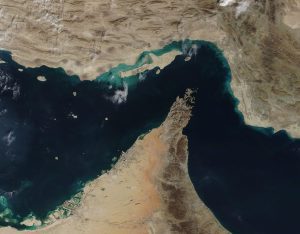
The Strait of Hormuz is a critical maritime “chokepoint” between Iran and Oman/UAE through which roughly a fifth of the world’s oil passes. Under the UN Convention on the Law of the Sea (UNCLOS), ships enjoy the right of “transit passage” through straits used for international navigation. CAATSA (Countering America’s Adversaries Through Sanctions Act, 2017) is the US law threatening secondary sanctions on countries trading in Iranian or Russian energy or defence — and India invokes “strategic autonomy” to balance its energy needs. The JCPOA (Joint Comprehensive Plan of Action, 2015) was the Iran nuclear deal whose collapse drove the sanctions cycle.
🎯 Why This Matters for CLAT
This story bundles together several CLAT favourites — international maritime law (UNCLOS, transit passage), US sanctions architecture (CAATSA), India’s foreign-policy doctrine (strategic autonomy), and energy economics. Expect questions linking the Strait of Hormuz to its geography, the JCPOA to its full form and year, and India’s 2019 halt on Iranian oil to the broader sanctions timeline.
📌 Key Facts
| Sanctions waiver | 60 days (through ~August 21) |
| Strait of Hormuz | Iran-Oman/UAE; ~1/5 of world oil |
| UNCLOS right | Transit passage |
| India April imports | ~530,000 tonnes Iranian oil |
| India halt year | 2019 |
| Key US law | CAATSA (2017) |
🧠 Memory Hook
“Hormuz holds a fifth” — about one-fifth of global oil flows through Hormuz, where ships enjoy “transit passage” under UNCLOS; a 60-day US waiver reopened it, easing pressure on India’s energy lifeline.
📝 Test yourself — take the 10-question quiz below:
Practice Quiz — 10 CLAT-Style Questions
Click an option to reveal the answer and explanation.