CURRENT AFFAIRS | 23 JUNE 2026
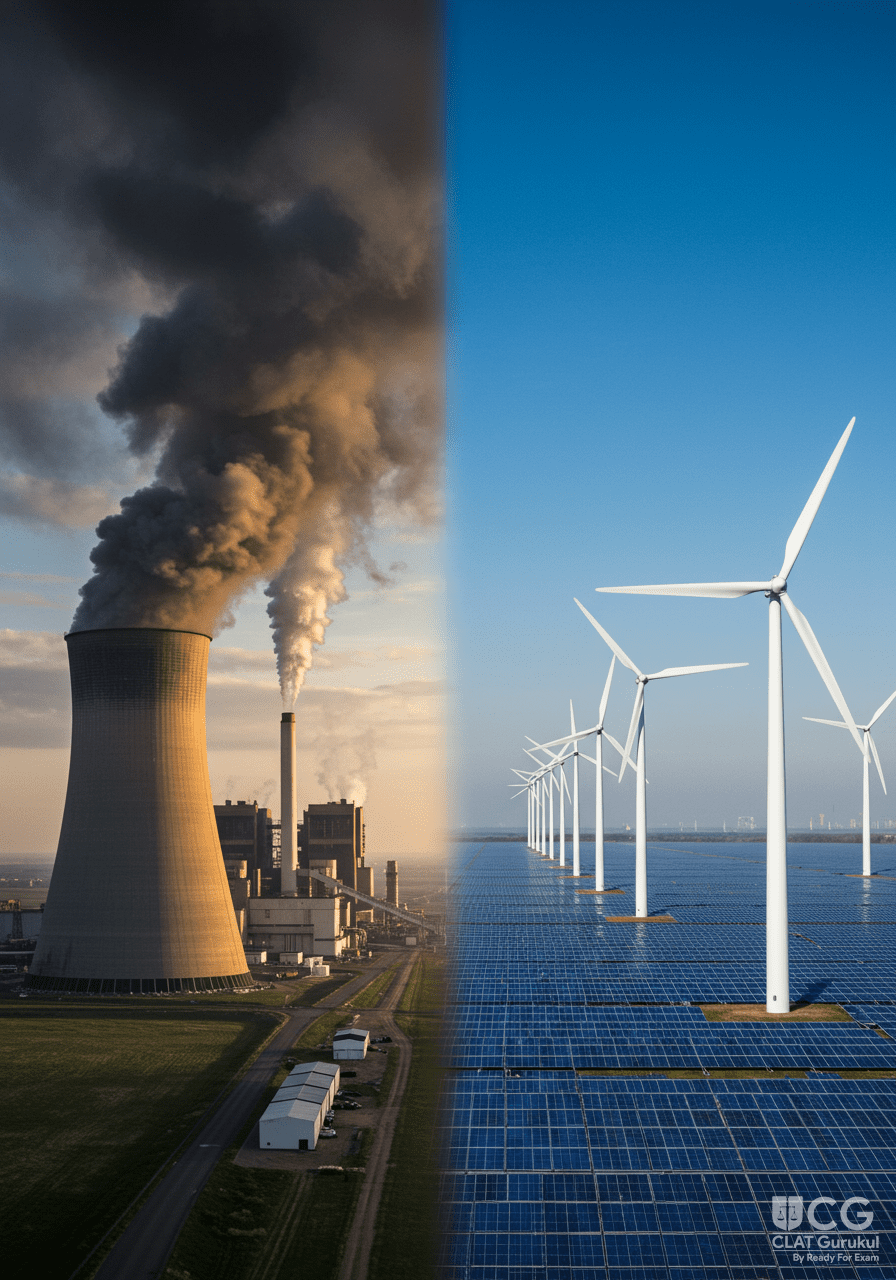
As India races to add solar and wind to its grid, an unexpected problem emerges: the grid is losing its natural “shock absorbers.” The solution? Repurpose ageing thermal plants into spinning machines that generate no power at all — but keep the lights steady.
What Happened
The Grid Controller of India (Grid-India) has identified 9 thermal power plants with a combined capacity of about 1.8 GW that can be repurposed as synchronous condensers (SYNCONs) to strengthen grid reliability as India integrates rapidly growing renewable energy. Of the shortlisted units, 8 are coal or lignite-based, and all are either under prolonged outage or operating at very low utilisation. A synchronous condenser is essentially a generator that spins freely without producing active energy, providing inertia, reactive power and voltage support that help maintain stability during sudden fluctuations in power demand or supply.
Because renewables like solar and wind reduce the stabilising influence of large spinning machines — which give the grid “inertia” — synchronous condensers help fill the gap. The US, UK and Mexico have already converted thermal units this way. The proposal follows a review of summer-2024 grid preparedness and cites the June 2024 grid event triggered by the tripping of the Champa-Kurukshetra HVDC link, which caused a load reduction of about 16.5 GW across the Northern Region.
⚖️ Framework & Concepts
Grid frequency in India is maintained near 50 Hz, and “grid inertia” is the property that resists sudden frequency changes — a crucial buffer against blackouts. Reactive power supports voltage levels across the network. Grid-India (formerly POSOCO) runs the National and Regional Load Despatch Centres (NLDC/RLDCs) that balance supply and demand in real time. Converting idle thermal units into synchronous condensers is part of India’s broader energy transition toward higher renewable penetration without sacrificing reliability.
🎯 Why This Matters for CLAT
Energy, infrastructure and the renewable transition are increasingly tested in CLAT’s GK section. Terms like Grid-India, POSOCO, grid inertia and HVDC links are exactly the kind of static-meets-current GK that examiners pair in matching and assertion-reason questions. This story also strengthens your conceptual vocabulary for environment and economy passages in the comprehension-based GK format.
📌 Key Facts
| Body | Grid-India (formerly POSOCO) |
| Plants identified | 9 (8 coal/lignite) |
| Combined capacity | About 1.8 GW |
| SYNCON role | Inertia, reactive power, voltage support |
| June 2024 trigger | Champa-Kurukshetra HVDC link tripping |
| Load reduction then | About 16.5 GW (Northern Region) |
🧠 Memory Hook
“Spin without sin” — a synchronous condenser spins (giving inertia and voltage support) without “sinning” by burning fuel to produce active power. Remember: 9 plants, ~1.8 GW, run by Grid-India.
📝 Test yourself — take the 10-question quiz below:
Practice Quiz — 10 CLAT-Style Questions
Click an option to reveal the answer and explanation.