CURRENT AFFAIRS | 23 JUNE 2026
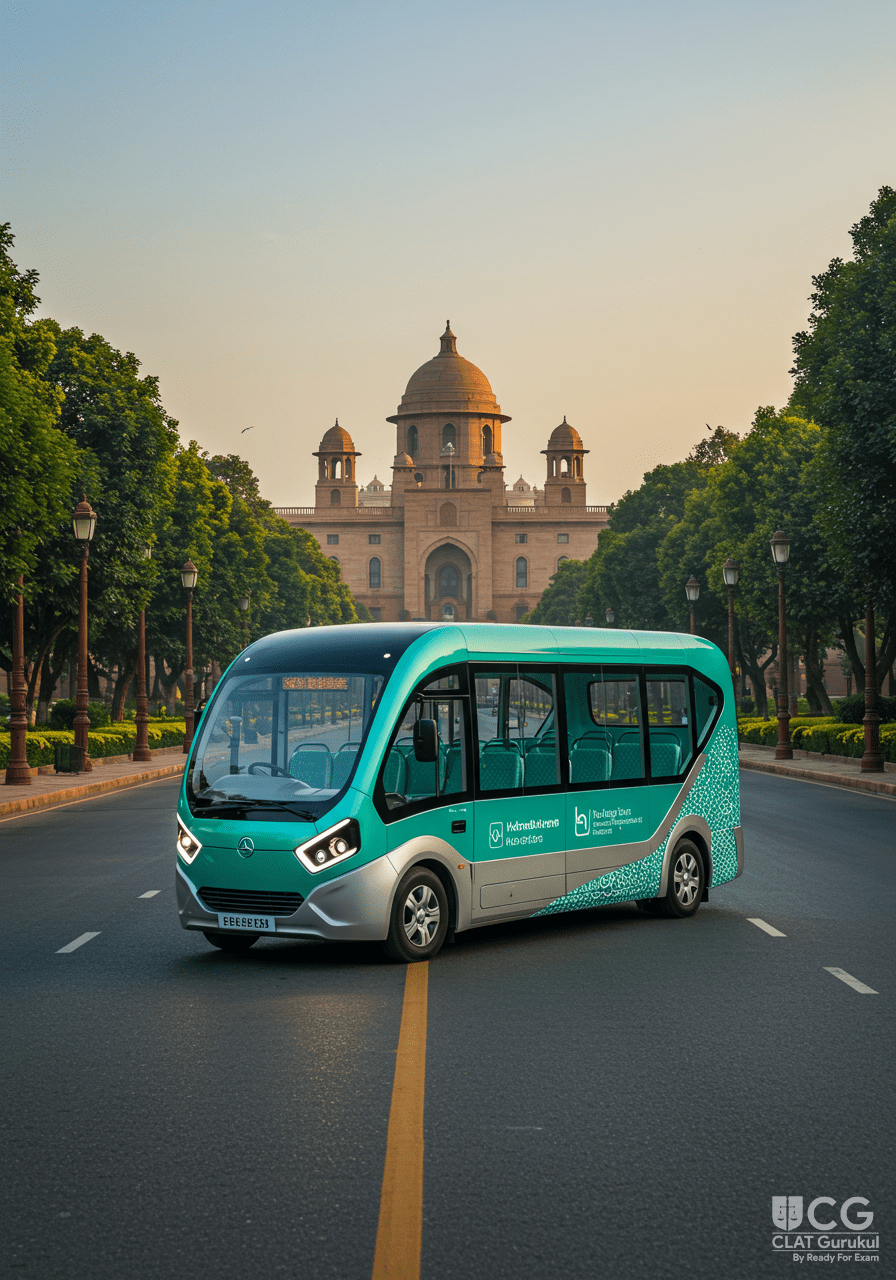
Should a car that still burns petrol get the same green incentives as a pure electric vehicle? That question is at the heart of a fierce policy debate in Delhi, as its new EV Policy heads to the Cabinet — with strong hybrids caught squarely in the crossfire.
What Happened
Delhi’s new Electric Vehicle (EV) Policy for 2026-30 is set to go before the Cabinet, having drawn over 700 public responses. A central flashpoint is whether strong (full) hybrids should receive incentives on par with pure EVs. A strong hybrid combines an electric motor with an internal-combustion engine and a larger battery, and can run on electricity alone at low speeds. The draft proposed a 50% exemption on road tax and registration charges for strong hybrids with an ex-showroom price up to Rs 30 lakh. Uttar Pradesh went further, allowing a 100% exemption — after which strong-hybrid registrations rose. Critics warn that incentivising hybrids dilutes the push for pure EVs and EV charging infrastructure.
Separately, the Haryana Cabinet on Monday approved motor-vehicle tax concessions to replace old trucks and buses (BS-IV or earlier) in the NCR with new ones meeting BS-VI or stricter norms. The scheme offers a 100% concession on the new vehicle’s motor-vehicle tax, with an estimated annual revenue loss of Rs 400-500 crore, and is backed by the National Capital Region Planning Board.
⚖️ Framework & Concepts
FAME (Faster Adoption and Manufacturing of Hybrid & Electric Vehicles) is the central EV-incentive scheme, while “EV30@30” is the aspiration of 30% EV sales by 2030. The vehicle scrappage policy targets old polluting vehicles, and BS-VI refers to Bharat Stage VI emission norms. The backdrop is NCR air pollution and cooperative federalism — multiple states (Delhi, Haryana, UP) coordinating their vehicle and emission policies under a shared regional planning framework.
🎯 Why This Matters for CLAT
EV policy, emission norms and environmental federalism are high-frequency CLAT current-affairs zones. The distinction between strong hybrids and pure EVs, the meaning of BS-VI, and schemes like FAME and EV30@30 make for clean factual MCQs, while the federalism angle (states coordinating via the NCR Planning Board) links directly to constitutional concepts of Centre-State and inter-State cooperation.
📌 Key Facts
| Policy | Delhi EV Policy 2026-30 |
| Public responses | Over 700 |
| Delhi hybrid exemption | 50% (up to Rs 30 lakh ex-showroom) |
| UP hybrid exemption | 100% |
| Haryana scheme | 100% tax concession, BS-IV→BS-VI replacement |
| Haryana revenue loss | Rs 400-500 crore/year |
🧠 Memory Hook
“Delhi half, UP full” — Delhi offers a 50% (half) tax exemption to strong hybrids, while UP offers 100% (full); meanwhile Haryana swaps BS-IV trucks for BS-VI with a 100% concession.
📝 Test yourself — take the 10-question quiz below:
Practice Quiz — 10 CLAT-Style Questions
Click an option to reveal the answer and explanation.