CURRENT AFFAIRS | 16 JUNE 2026
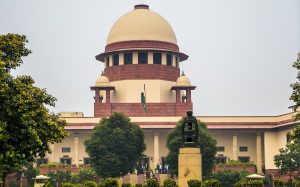
The Supreme Court on Monday sought responses from the Centre and Punjab on a plea alleging that Punjab failed to implement the Right of Children to Free and Compulsory Education (RTE) Act, 2009 — particularly Section 12(1)(c), which mandates that private unaided schools reserve 25% of entry-level seats for children from economically weaker sections (EWS) and disadvantaged groups.
A Bench of Justice Surya Kant and Justice Joymalya Bagchi issued notice on a plea by former bureaucrat Jagmohan Singh Raju, argued through advocate K S Raju. The plea contended that non-compliance was neither incidental nor isolated but substantial since the Act’s inception.
The Centre filed an affidavit stating that 476 children belonging to EWS had been admitted in private-aided schools. The dispute squarely engages Article 21A of the Constitution, which makes education a fundamental right for children aged 6 to 14.
Education is a Concurrent List subject, making both the Centre and states accountable. The case is classic legal-reasoning fodder — linking a fundamental right, a parliamentary statute, and judicial enforcement of social-justice guarantees.
Constitutional / Legal Framework
Article 21A, inserted by the 86th Constitutional Amendment Act, 2002, makes free and compulsory education a fundamental right for children aged 6–14; the RTE Act, 2009 operationalises it. Article 45 (a Directive Principle) now covers early-childhood care for children under six. In Unni Krishnan v. State of AP (1993), the Court linked education to Article 21; in Society for Unaided Private Schools of Rajasthan v. Union of India (2012), it upheld the 25% RTE quota under Section 12(1)(c). Education is a Concurrent List subject.
CLAT Angle
A textbook fundamental-rights question set. Anchor: Article 21A + 86th Amendment (2002); RTE Act 2009; Section 12(1)(c) = 25% EWS quota; age band 6–14. Pair landmark cases — Unni Krishnan (1993) (education under Article 21) and Society for Unaided Private Schools of Rajasthan (2012) (quota upheld). Note the Bench: Justice Surya Kant and Justice Joymalya Bagchi. Don’t confuse Article 21A with Article 45.
Key Facts
| Court action | SC notice to Centre & Punjab (Monday) |
| Act | RTE Act, 2009 — Section 12(1)(c) |
| Quota | 25% entry-level seats for EWS |
| Fundamental right | Article 21A (free & compulsory edu, 6–14) |
| Inserted by | 86th Constitutional Amendment Act, 2002 |
| Bench | Justice Surya Kant & Justice Joymalya Bagchi |
Mnemonic / Memory Hook
“86 + 21A = School for 6 to 14.” The 86th Amendment (2002) added Article 21A; the right covers ages 6–14. For the quota: “12(1)(c) = 25% for EWS” — note the “12 and 25” pairing. Case hook: “Rajasthan upheld the quota (2012).”
Why this matters for CLAT 2027: Article 21A, the RTE Act and the 25% EWS quota are among the most frequently tested fundamental-rights topics in CLAT, often as legal-reasoning passages. Master the 86th Amendment (2002), Section 12(1)(c), the 6–14 age band, and the landmark Unni Krishnan (1993) and Society for Unaided Private Schools of Rajasthan (2012) judgments to ace CLAT 2027 questions on the right to education.
Practice Quiz — 10 CLAT-Style Questions
Click an option to reveal the answer and explanation.