CURRENT AFFAIRS | 16 JULY 2026
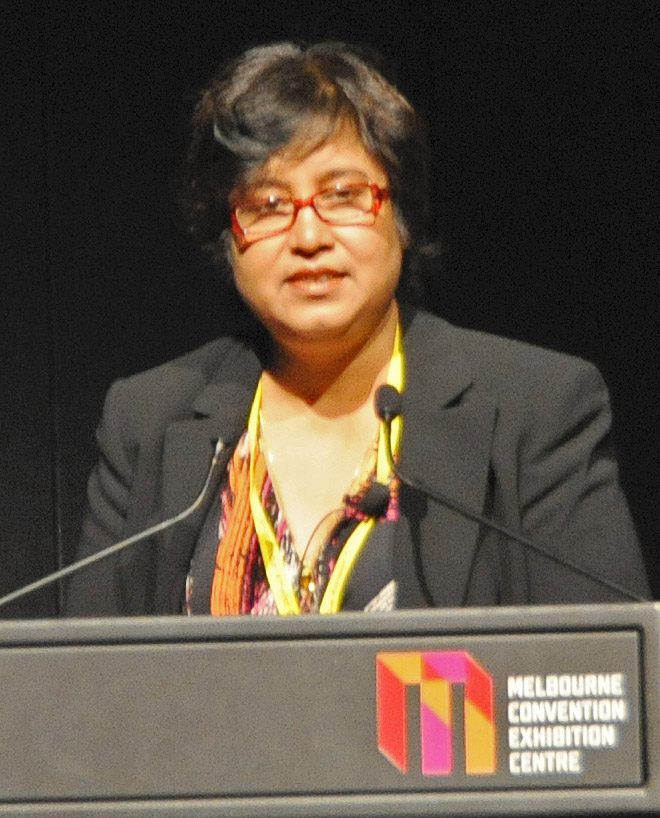
An invitation to Bangladeshi writer Taslima Nasrin to return to Kolkata after nearly two decades has reopened a familiar debate in India — how far the freedom of speech and expression can be squeezed by protest, outrage and pre-emptive censorship.
Nasrin was effectively driven out of Kolkata years ago amid street protests, long after the furore over her 1993 novel ‘Lajja’ and her exile from Bangladesh. Her possible return has been welcomed by writers as a corrective, but it also throws light on how governments and institutions have repeatedly responded to anger against authors and artists — not by protecting them, but by withdrawing books, cancelling screenings, ordering edits and quietly narrowing the space for dissenting voices.
The constitutional frame is Article 19(1)(a), which guarantees every citizen the freedom of speech and expression. That freedom is not absolute: Article 19(2) allows the State to impose ‘reasonable restrictions’ — but only on a closed list of grounds, such as the sovereignty and integrity of India, public order, decency or morality, defamation and incitement to an offence. Crucially, the mere fact that a book or a lecture provokes anger is not, by itself, one of those grounds.
This is where the idea of a ‘heckler’s veto’ matters. When the authorities suppress otherwise lawful expression because a hostile group threatens disorder, they let the most intolerant reaction dictate what everyone else may read or watch. Courts have repeatedly cautioned that the answer to the threat of disorder is to maintain order and protect the speaker, not to silence the speech. The pattern recurs across cases — Tamil writer Perumal Murugan’s ‘Madhorubhagan’ (One Part Woman) and the long shadow of the ban on Salman Rushdie’s work — where offence, rather than any Article 19(2) ground properly applied, drove the restriction.
Any restriction that does survive must also be ‘reasonable’ and proportionate, not excessive or arbitrary. That is the standard a CLAT passage will usually test: whether a ban is genuinely tied to a listed ground and narrowly tailored, or whether it is really an attempt to appease outrage.
🏛️ Constitutional / Legal Framework
- Article 19(1)(a): Guarantees every citizen the freedom of speech and expression.
- Article 19(2): Permits only ‘reasonable restrictions’ on a closed list of grounds (public order, decency, morality, security, sovereignty and integrity, defamation, incitement).
- Reasonableness & proportionality: A restriction must be tied to a listed ground and not be excessive or arbitrary.
- ‘Heckler’s veto’: Outrage or the threat of disorder cannot justify silencing protected expression.
- Comparators: Perumal Murugan’s ‘Madhorubhagan’ and the Rushdie ban — censorship driven by offence rather than a proper 19(2) ground.
⚖️ Why This Matters for CLAT
Free speech is among the most heavily tested areas of CLAT legal reasoning. Expect a passage that describes a book ban or cancelled event and asks you to identify the right (Article 19(1)(a)), locate the restriction within Article 19(2)’s closed list, and judge whether it is ‘reasonable’. The ‘heckler’s veto’ is a favourite application point: hurt sentiments alone are not a ground, and the State’s duty is to protect the speaker rather than yield to the mob.
📌 Key Facts
| Who | Taslima Nasrin, Bangladeshi writer in exile |
| Trigger | Invitation to return to Kolkata after nearly two decades |
| Contested book | ‘Lajja’ (1993) |
| Core right | Article 19(1)(a) — freedom of speech & expression |
| Limits | Article 19(2) — reasonable restrictions, closed grounds |
| Key concept | ‘Heckler’s veto’ |
| Parallels | Perumal Murugan’s Madhorubhagan; Rushdie |
Nasrin’s possible homecoming is thus less about one writer than about a principle: a constitutional democracy protects speech precisely when it is unpopular, and reasonable restrictions under Article 19(2) cannot be stretched to mean whatever an angry crowd demands.
🧠 Memory Aid
“19(1)(a) grants the voice; 19(2) sets the narrow limits — a heckler’s veto is not one of them.” Speech is protected even when it offends; a restriction is valid only if it fits Article 19(2)’s closed grounds and is reasonable and proportionate.
Practice Quiz — 10 CLAT-Style Questions
Click an option to reveal the answer and explanation.