CURRENT AFFAIRS | 16 JULY 2026
China has, for the first time, tested a sea-based intercontinental ballistic missile (ICBM) in international waters — a 6 July launch that strengthens the sea leg of its nuclear triad and has reopened debate over Beijing’s nuclear intentions in the Indo-Pacific.
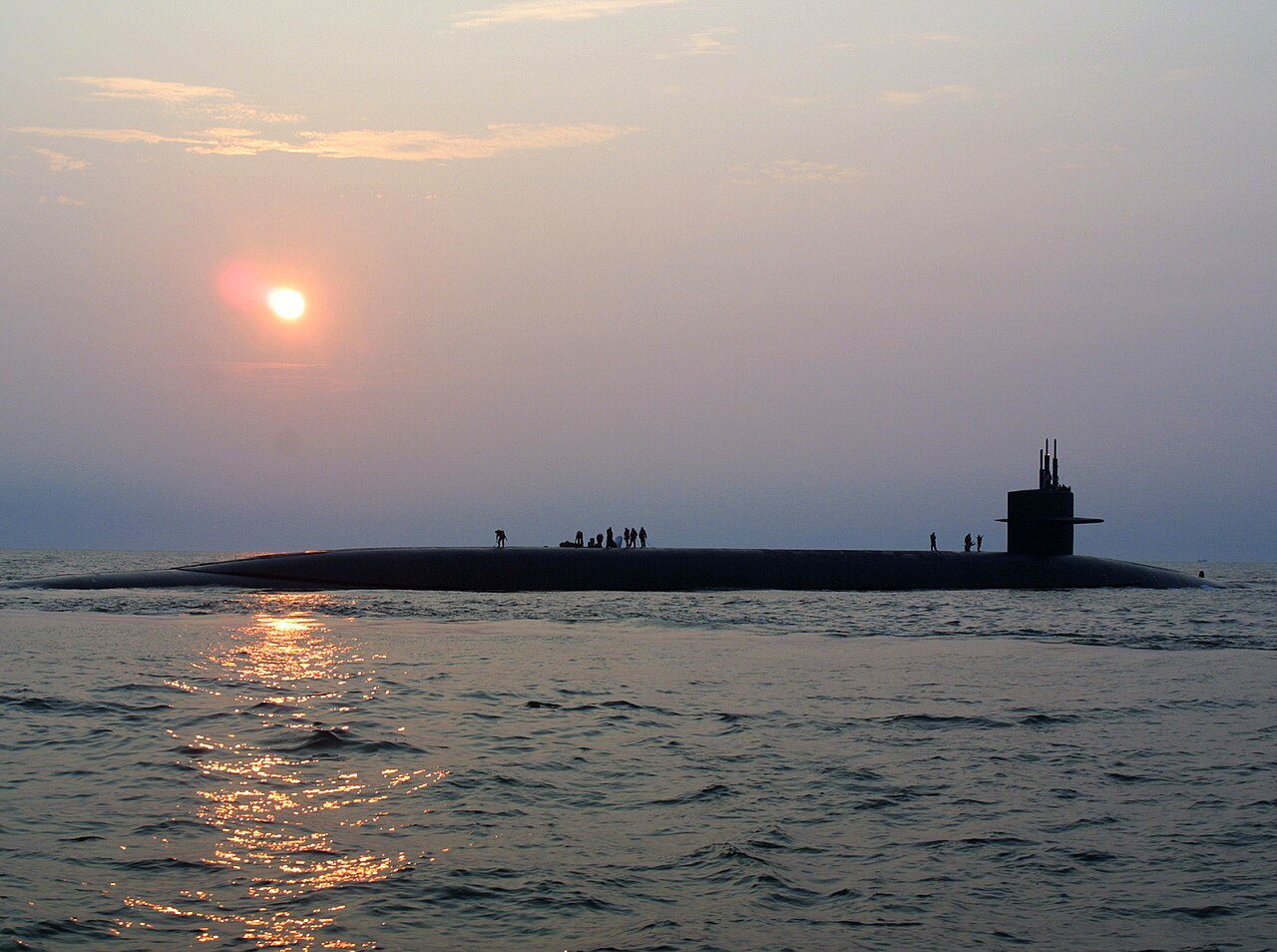
Conducted by the People’s Liberation Army (PLA) Navy, the missile carried a dummy warhead that travelled roughly 7,300 km. It reportedly flew over the Philippines before landing in the South Pacific near French Polynesia, in waters covered by the Treaty of Rarotonga — the South Pacific Nuclear-Free Zone. Analysts believe the missile was the JL-3, a submarine-launched ballistic missile (SLBM) with a range of about 10,000 km, fired from a Type 094 SSBN, a nuclear-powered ballistic-missile submarine.
The strategic significance lies in the concept of the nuclear triad — the ability to deliver nuclear weapons by land, air and sea. Submarine-launched missiles are the most survivable leg because submerged boats are hard to detect and can retaliate even after an adversary’s first strike. A robust sea leg therefore underpins a credible second-strike capability, the cornerstone of deterrence theory.
The test has revived a doctrinal question. China has long declared a ‘no-first-use’ (NFU) policy and a posture of ‘credible minimum deterrence’. Some analysts now ask whether Beijing is drifting towards a ‘launch-on-warning’ or ‘early-warning counter-strike’ stance, which would mark a significant shift. Candidates should keep these terms distinct: no-first-use governs when weapons may be used, while minimum deterrence concerns how large an arsenal is kept.
For India, the development sharpens the importance of its own sea-based deterrent — the Arihant-class SSBNs armed with K-4 and K-5 SLBMs — which give it a survivable second-strike option consistent with its own no-first-use doctrine. The episode also sits within the wider architecture of the Nuclear Non-Proliferation Treaty (NPT) and regional nuclear-free-zone treaties.
🏛️ Constitutional / Legal Framework
- Nuclear triad: The capability to deliver nuclear weapons by land, air and sea.
- No-first-use (NFU): A declared policy not to use nuclear weapons first; held by both China and India.
- Treaty of Rarotonga: Establishes the South Pacific Nuclear-Free Zone covering the reported landing area.
- Nuclear Non-Proliferation Treaty (NPT): The global framework governing nuclear-weapon possession and spread.
- Second-strike capability: The survivable ability to retaliate, central to deterrence and delivered chiefly by SSBNs.
⚖️ Why This Matters for CLAT
Defence, nuclear doctrine and international treaties are frequent CLAT current-affairs anchors, often tested through assertion-reason and passage-based questions. The topic rewards precise vocabulary — triad, no-first-use, minimum deterrence, second-strike — and knowledge of specific treaties such as Rarotonga and the NPT. It also invites comparison with India’s Arihant-class deterrent, making it a rich source of application-style questions.
📌 Key Facts
| Date of test | 6 July 2026 |
| Conducted by | PLA Navy |
| Distance covered | About 7,300 km (dummy warhead) |
| Likely missile | JL-3 SLBM (range ~10,000 km) |
| Platform | Type 094 SSBN |
| Landing zone | South Pacific near French Polynesia |
| India’s equivalent | Arihant-class SSBNs, K-4/K-5 SLBMs |
Whether or not it signals a doctrinal shift, the test underlines that the sea leg of nuclear deterrence is becoming central to great-power competition in the Indo-Pacific — a region where India’s own undersea capabilities are steadily maturing.
🧠 Memory Aid
“Sea leg completes the triad — JL-3 from a Type 094, 7,300 km to Rarotonga.” Land, air, sea; no-first-use is a use policy, minimum deterrence is an arsenal policy; survivable SLBMs mean second strike.
Practice Quiz — 10 CLAT-Style Questions
Click an option to reveal the answer and explanation.