CURRENT AFFAIRS | 16 JULY 2026
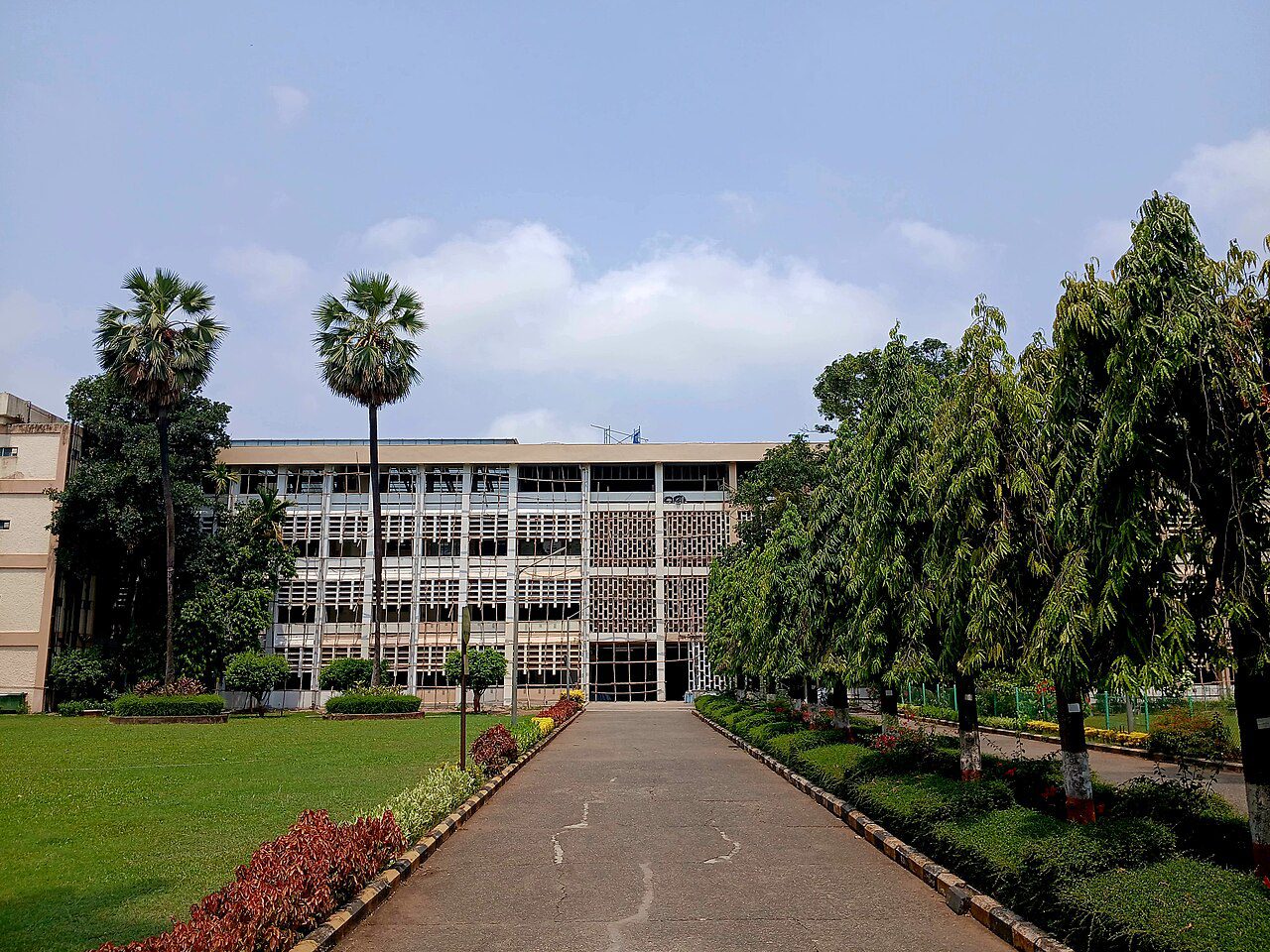
Scientists at IIT Bombay have devised a novel, efficient way to turn simple straight-chain carbon compounds into complex ring-shaped molecules — a long-sought shortcut in synthetic chemistry that could make drug discovery faster, cheaper and markedly greener.
The research, led by Professor Debabrata Maiti and published in the journal Nature, tackles a problem chemists have wrestled with for decades. Many medicines and fine chemicals are built around ring-shaped molecules, but assembling those rings from cheap, abundant starting materials — such as fatty acids, which are straight chains of carbon atoms — has traditionally required many steps and generated large volumes of waste.
The new method compresses that route. It converts straight-chain compounds into the desired rings in fewer steps and with much greater efficiency, while cutting chemical waste significantly. That combination places the work firmly within the principles of green chemistry, which seek to reduce the environmental footprint of chemical manufacturing. Somnath Kar of the Bhabha Atomic Research Centre (BARC) collaborated on the study.
To prove the point, the team used the method to synthesise muricatacin, a compound with anti-cancer properties. Muricatacin is ordinarily available only in vanishingly small quantities from natural sources — about 15 milligrams from 15 kilograms of plant material. A reliable synthetic route means such molecules can be produced in usable amounts for research and, potentially, therapy, without stripping large volumes of plant matter.
Beyond the chemistry, the achievement is a marker of India’s research capacity. IIT Bombay is an Institute of National Importance under the Institutes of Technology Act, 1961, and publication in Nature signals peer-reviewed international recognition. Advances of this kind also feed into intellectual-property questions under the Patents Act, 1970, when novel processes are commercialised.
🏛️ Constitutional / Legal Framework
- Institutes of Technology Act, 1961: Confers on IITs the status of Institutes of National Importance.
- Journal Nature: The peer-reviewed venue in which the study appeared, signalling international validation.
- BARC (Department of Atomic Energy): The collaborating institution, via researcher Somnath Kar.
- Green chemistry principles: The framework of waste reduction and efficiency the method embodies.
- Patents Act, 1970: Governs process patents relevant when such synthetic routes are commercialised.
⚖️ Why This Matters for CLAT
Science and technology items appear in CLAT GK and in comprehension passages that reward precise reading over sensational claims. This story tests whether a candidate can hold the exact facts — the researcher, the institution, the journal, the compound — and connect them to institutional context such as the Institutes of Technology Act, 1961 and the Patents Act, 1970. It is a good example of a science passage that quietly carries a legal-institutional layer.
📌 Key Facts
| Institution | IIT Bombay |
| Lead researcher | Professor Debabrata Maiti |
| Journal | Nature |
| Advance | Straight-chain to ring molecules, fewer steps |
| Demonstration compound | Muricatacin (anti-cancer) |
| Collaborator | Somnath Kar, BARC |
| Green-chemistry gain | Higher efficiency, much less waste |
If the method scales, it could shorten the path from cheap raw materials to life-saving molecules — a reminder that quiet laboratory advances can carry outsized public value.
🧠 Memory Aid
“Straight to ring, fewer steps, less waste — Maiti in Nature.” Fatty-acid chains become medicinal rings; muricatacin is the proof; IIT Bombay and BARC are the players.
Practice Quiz — 10 CLAT-Style Questions
Click an option to reveal the answer and explanation.