CURRENT AFFAIRS | 26 JUNE 2026
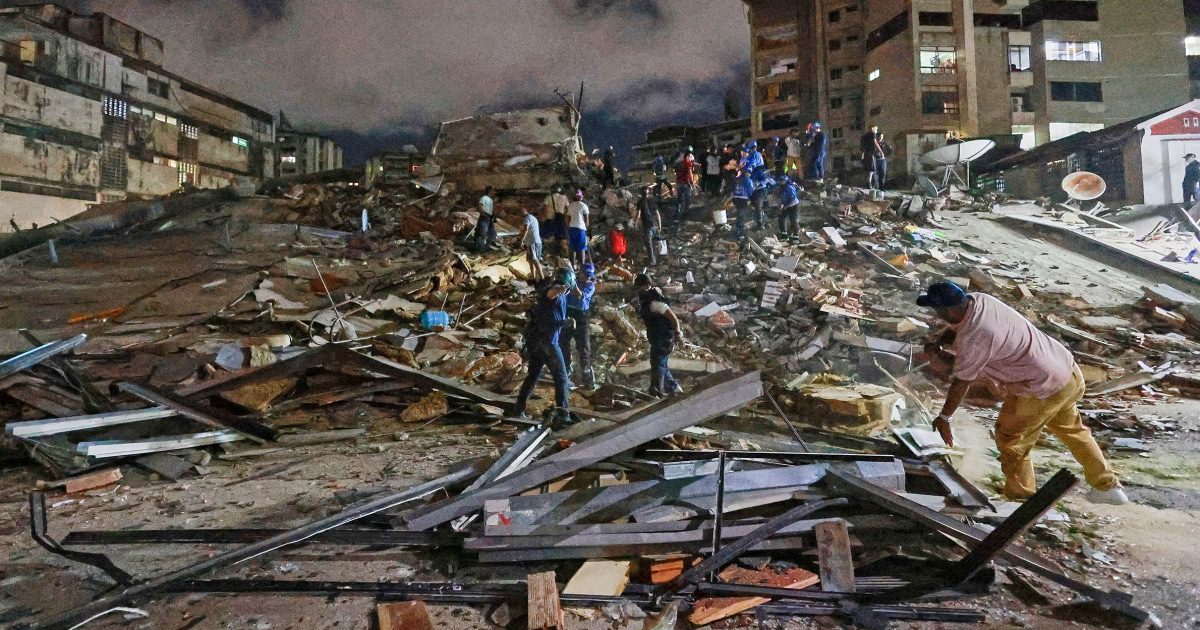
Two powerful earthquakes — magnitude 7.2 followed about 39 seconds later by 7.5 — struck near Venezuela’s coast west of Caracas, killing at least 164–188 people and trapping thousands in one of the country’s deadliest natural disasters. The USGS called it a rare “seismic doublet” — a phrase worth knowing for CLAT geography and disaster-GK.
What is a seismic doublet?
A seismic doublet is two independent earthquakes of similar magnitude occurring in quick succession — not a main shock and aftershock, but two comparable events. Venezuela sits on the boundary between the Caribbean and South American tectonic plates, a strike-slip fault zone where the plates grind past each other laterally. A shallow focal depth of ~10 km concentrated the energy near the surface, amplifying the shaking and damage.
Constitutional & Legal Framework
Key earth-science concepts every aspirant should lock in:
- Strike-slip fault — crustal blocks move horizontally past each other (e.g., the boundary here).
- Normal fault — forms under tension/extension; the hanging wall drops down.
- Reverse (thrust) fault — forms under compression; the hanging wall rides up.
- USGS — the United States Geological Survey, which measures and classifies earthquakes on the moment-magnitude scale.
Why This Matters for CLAT
Disaster events are reliable CLAT GK fodder, and they double as legal-reasoning context on India’s disaster diplomacy (PM Modi offered assistance). Master plate tectonics, the three fault types, focal depth, and the difference between the Richter and moment-magnitude scales — these recur across GK and science-passage questions.
Key Facts at a Glance
| The twin quakes | M7.2 then M7.5, about 39 seconds apart, west of Caracas |
| Seismic doublet | Two independent quakes of similar magnitude in quick succession |
| Tectonic setting | Caribbean–South American plate boundary (strike-slip fault) |
| Focal depth | Shallow (~10 km) — intensified surface shaking and damage |
| Death toll | At least 164–188; feared to rise; among the country’s worst disasters |
| Fault types | Strike-slip (lateral), normal (extension), reverse (compression) |
Memory Hook (Mnemonic)
Doublet = “Double trouble” — two near-equal quakes back-to-back on a strike-slip fault.
Test yourself
Practice Quiz — 10 CLAT-Style Questions
Click an option to reveal the answer and explanation.