
CURRENT AFFAIRS | 25 JUNE 2026
What Happened
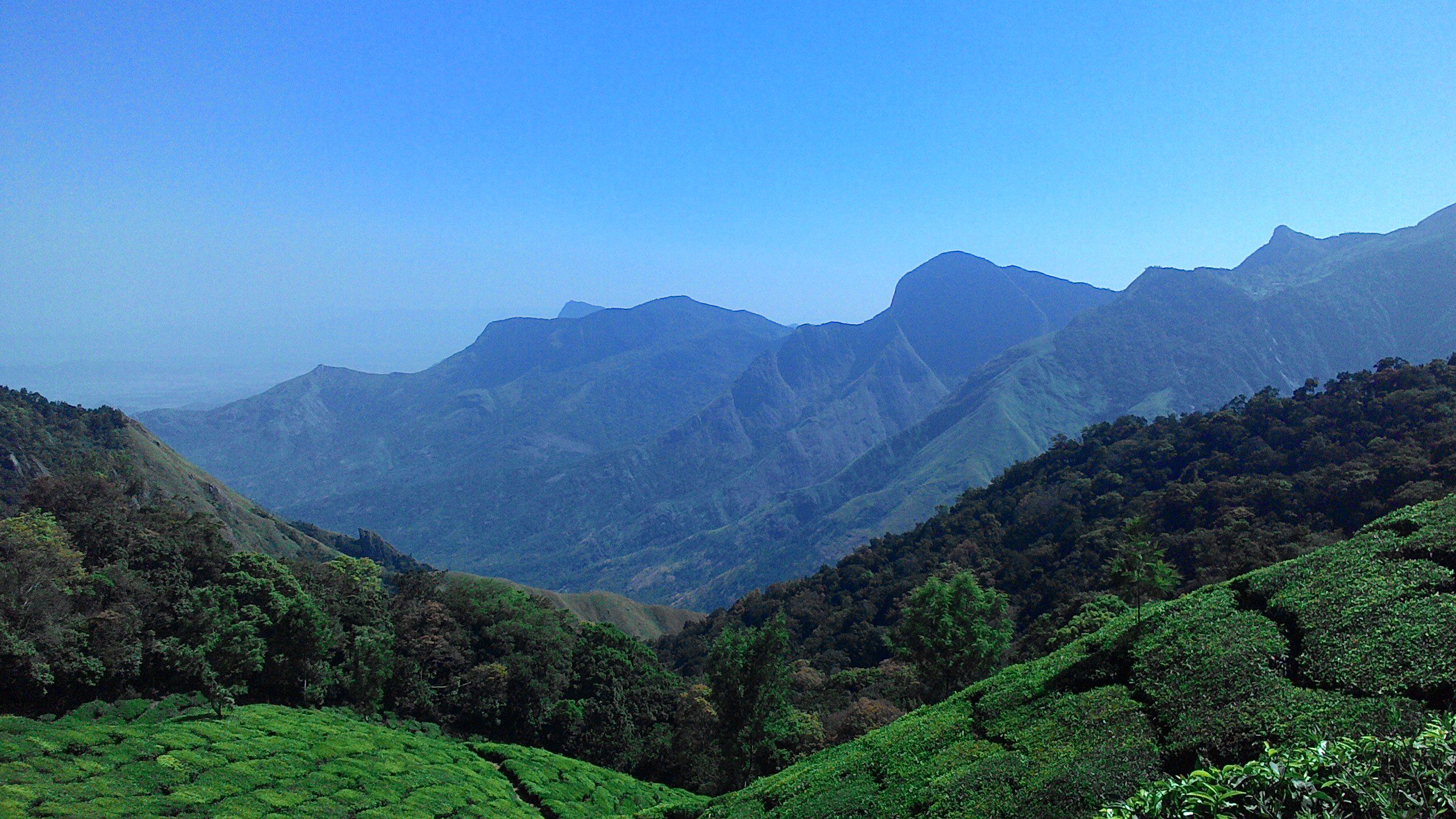
An Indian Express editorial, “On Western Ghats, South must break impasse,” flags that the implementation of measures to protect the Western Ghats — proposed by the K. Kasturirangan-led committee — has hung fire for more than 12 years. Six states (Maharashtra, Gujarat, Goa, Kerala, Tamil Nadu and Karnataka) have resisted the proposal to declare roughly 56,800 sq km — about 37% of the 1,64,000 sq km Western Ghats — as an Eco-Sensitive Area (ESA). The 2018 and 2024 Wayanad/Kerala landslides underscored the human cost of ignoring the region’s fragility. Separately, the Leader of Opposition Rahul Gandhi raised ecological concerns over the Great Nicobar project.
Background: Gadgil vs Kasturirangan
Two expert committees shaped the debate. The earlier Madhav Gadgil committee (Western Ghats Ecology Expert Panel, WGEEP, 2011) recommended a far larger conservation footprint — roughly 64% of the Ghats as ecologically sensitive — with strict curbs on mining, dams and polluting industry. Calling it impractical, the government set up the Kasturirangan Committee (High-Level Working Group, 2013), which scaled the proposed ESA down to about 37%. The legal hook for declaring such zones is the power to notify Eco-Sensitive Areas under the Environment (Protection) Act, 1986, which empowers the Centre to restrict industrial and developmental activity to protect fragile ecosystems.
Why It Matters
The Western Ghats is one of the world’s eight “hottest” biodiversity hotspots and a UNESCO World Heritage site (39 component properties). A biodiversity hotspot must meet two criteria: at least 1,500 endemic vascular plant species, and the loss of at least 70% of its original natural vegetation. The impasse is a textbook case of cooperative-federalism friction: while the Centre holds the ESA notification power under the EPA 1986, the six states fear curbs on agriculture, plantations, mining and construction. Repeated landslides have made the cost of inaction tangible, intensifying pressure to finally settle the ESA boundaries.
Constitutional / Legal Framework
Environment (Protection) Act, 1986 — the umbrella statute empowering the Centre to notify Eco-Sensitive Areas (ESAs) and restrict activities harmful to fragile ecosystems. The Madhav Gadgil committee (WGEEP, 2011) recommended ~64% ESA coverage; the K. Kasturirangan High-Level Working Group (2013) reduced it to ~37% (56,800 sq km). The Western Ghats is a UNESCO World Heritage site and a global biodiversity hotspot. Six states — Maharashtra, Gujarat, Goa, Kerala, Tamil Nadu, Karnataka — must concur, raising federal-coordination issues.
CLAT Angle
Environment law is a CLAT staple. Lock in the ESA notification power under the EPA 1986, the Gadgil (~64%) versus Kasturirangan (~37%) contrast, the six Western Ghats states, and the biodiversity-hotspot criteria. Legal Reasoning passages often pit Centre’s environmental notification power against states’ developmental autonomy — exactly this impasse.
Key Facts
| Proposed ESA | ~56,800 sq km (~37% of 1,64,000 sq km) |
| Gadgil panel (2011) | WGEEP — recommended ~64% ESA |
| Kasturirangan (2013) | High-Level Working Group — ~37% |
| Legal basis | Environment (Protection) Act, 1986 |
| Six states | MH, GJ, Goa, Kerala, TN, Karnataka |
Mnemonic / Memory Hook
“Gadgil = Greater (64%), Kasturirangan = Cut-down (37%).” ESA power flows from EPA 1986. Six states spell “MG-GK-TK” — Maharashtra, Gujarat, Goa, Kerala, Tamil Nadu, Karnataka.
Practice Quiz — 10 CLAT-Style Questions
Click an option to reveal the answer and explanation.