CURRENT AFFAIRS | 14 JULY 2026
The World Inequality Report (WIR) 2026, released in June by the World Inequality Lab at the Paris School of Economics, has reopened a hard question: are we measuring the inequality that actually shapes people’s lives, or only the part that is easy to count?
The World Inequality Lab, the body behind the World Inequality Database and associated with economists Thomas Piketty, Lucas Chancel and Gabriel Zucman, has long argued that headline income statistics understate how skewed societies really are. Its 2026 edition arrives alongside a UN report titled “Counting What Counts”, released in May, which presses the same point from the direction of statistics and data gaps. Together they frame a debate that a sharp Indian Express editorial by feminist economist Bina Agarwal takes one crucial step further.
Agarwal’s argument is that policy remains fixated on income inequality — differences in what people earn — while ignoring the deeper and more durable problem of wealth inequality, the distribution of assets such as land, housing and financial holdings. Wealth matters more precisely because it is not primarily earned. Its main driver is inheritance: assets pass down generations, compounding advantage in a way that a single year’s salary never can. A society can look tolerably equal on income and still be brutally unequal on wealth.
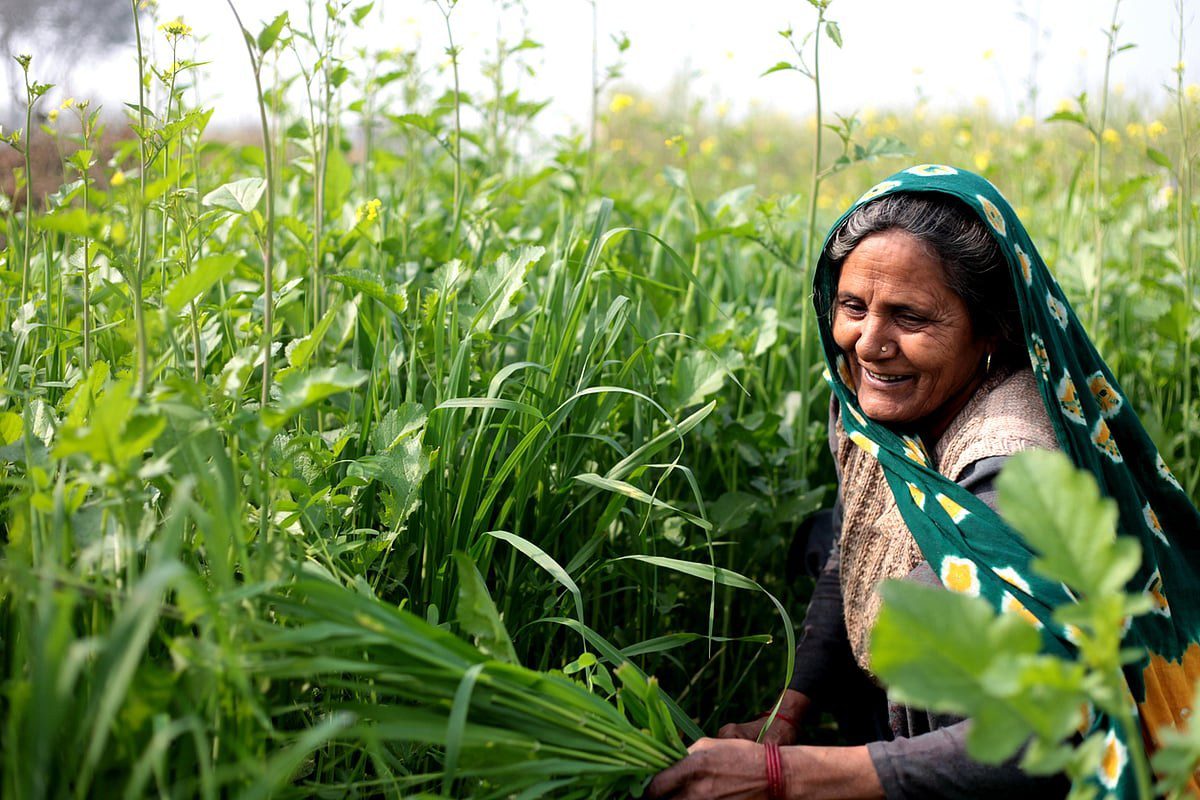
Her most important contribution is to show that this wealth gap is deeply gendered. Across much of the Global South, women own only about 12–16% of land in rural landowning households, even though enormous numbers of them are de facto farmers who sow, tend and harvest. The data itself hides the problem: while gendered pension-wealth figures exist for many countries, gendered data on land owned exists for only around 1% of Global South countries. India’s own numbers deepen the worry — the Periodic Labour Force Survey (PLFS) 2023-24 shows 86% of women workers, and 91% of rural women workers, are informally employed, without contracts or social security. Yet the payoff from correcting this is large: research shows women’s asset ownership reduces domestic violence, lowers poverty risk and raises agricultural productivity.
🏛️ Constitutional / Legal Framework
- Article 39(b) & 39(c) (DPSP): Direct the State to ensure material resources are distributed to subserve the common good and that wealth is not concentrated — the textual hook for redistributive and asset-equity policy.
- Article 15(3): Empowers the State to make special provisions for women, saving pro-women asset-titling and welfare schemes from a discrimination challenge.
- Article 14: Guarantees equality before law; substantive equality supports affirmative measures for women’s asset access.
- Article 300A: Right to property as a constitutional (not fundamental) right — frames land and asset ownership debates.
⚖️ Why This Matters for CLAT
This is a classic GK-meets-reasoning topic. Aspirants must cleanly distinguish income inequality (earnings) from wealth inequality (assets, driven mainly by inheritance) — a distinction examiners love to test. On the legal side, expect passages linking the editorial to the Directive Principles in Article 39(b)-(c) and to Article 15(3)’s special-provisions clause. Data points like the Gini coefficient (0 = equality, 1 = maximal) and PLFS informality figures are prime factual-GK fodder.
📌 Key Facts
| Report | World Inequality Report (WIR) 2026, June 2026 |
| Published by | World Inequality Lab, Paris School of Economics |
| Key economists | Piketty, Chancel, Zucman (World Inequality Database) |
| UN companion | “Counting What Counts” (May 2026) |
| Women’s land share | Only 12–16% in rural landowning households (Global South) |
| Data gap | Gendered land-ownership data for only ~1% of Global South countries |
| PLFS 2023-24 | 86% women workers & 91% rural women workers informally employed |
| Gini coefficient | 0 = perfect equality, 1 = maximal inequality |
The takeaway for policy — and for the aspirant — is that closing India’s inequality gap means looking past pay slips to who actually owns the land, the house and the savings, and that this ownership is overwhelmingly male.
🧠 Memory Aid
“LAND = Land Assets Not Distributed (to women)” — remember that WEALTH (assets, driven by inheritance) is the gendered gap Article 39(b)-(c) and 15(3) speak to, not just INCOME.
Practice Quiz — 10 CLAT-Style Questions
Click an option to reveal the answer and explanation.