CURRENT AFFAIRS | JUNE 4, 2026
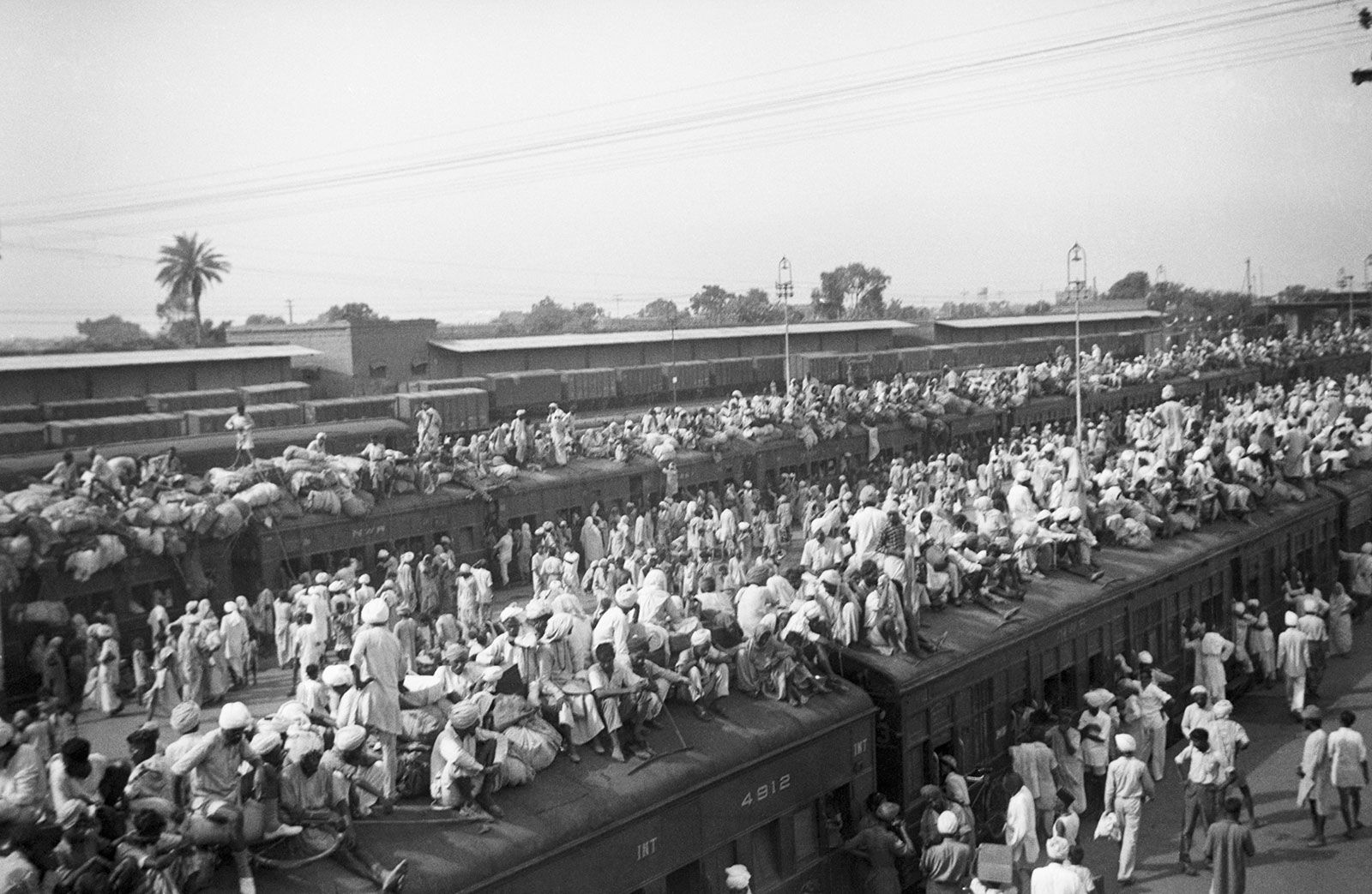
On 3 June 1947, the last Viceroy of British India, Lord Louis Mountbatten, unveiled the partition blueprint that would split the subcontinent into two independent dominions — India and Pakistan. Seventy-nine years on, the “June 3 Plan” remains the single most consequential legal-political instrument of modern South Asian history.
Constitutional Framework
The Plan was given statutory force by the Indian Independence Act, 1947, passed by the UK Parliament on 18 July 1947 — an Act that partitioned British India into two dominions effective 15 August 1947 and ended British paramountcy over the princely states.
Until each dominion adopted its own Constitution, the Government of India Act, 1935 continued as the working constitution of both. India’s Constitution, when adopted on 26 November 1949, opened with Article 1 — “India, that is Bharat, shall be a Union of States.”
The princely states were integrated through the Instrument of Accession, the legal device drafted with V.P. Menon and Sardar Patel. Disputed accessions — Junagadh, Hyderabad, Kashmir — birthed enduring constitutional issues, including Article 370 on Jammu & Kashmir (effectively read down in August 2019). The Radcliffe Award, drawn by Sir Cyril Radcliffe’s Boundary Commission, was published on 17 August 1947.
Why This Matters For CLAT
- Constitutional history is high-yield: CLAT routinely tests the Acts of 1919, 1935 and 1947 in Legal Reasoning and GK comprehensions.
- Anchor your Article 1 chronology: Independence (15 Aug 1947) → Constitution adoption (26 Nov 1949) → Commencement (26 Jan 1950).
- Princely state integration connects to Article 370 — a perennial Legal Current Affairs trap.
- Names to remember: Mountbatten, Radcliffe, V.P. Menon, Sardar Patel — these surface in passage-based questions.
Key Facts At A Glance
| Item | Detail |
|---|---|
| Mountbatten arrives Delhi | 22 March 1947 |
| Original transfer-of-power deadline | 30 June 1948 |
| June 3 Plan announced | 3 June 1947 |
| Indian Independence Act passed | 18 July 1947 (UK Parliament) |
| Transfer of power advanced to | 15 August 1947 |
| Boundary Commission Chair | Sir Cyril Radcliffe |
| NWFP decision mechanism | Referendum (separately decided) |
| Working Constitution (interim) | Government of India Act, 1935 |
| Article 1 of Indian Constitution | “India, that is Bharat, shall be a Union of States” |
Memory Trick — MOUNT
Mandate (22 Mar 47) → Objection (League/Congress) → Unveiling (3 Jun 47) → NWFP Referendum → Transfer of Power (15 Aug 47).
Practice Quiz — 10 CLAT-Style Questions
Click an option to reveal the answer and explanation.