
CURRENT AFFAIRS | JUNE 4, 2026
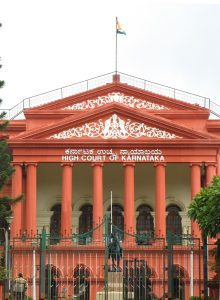
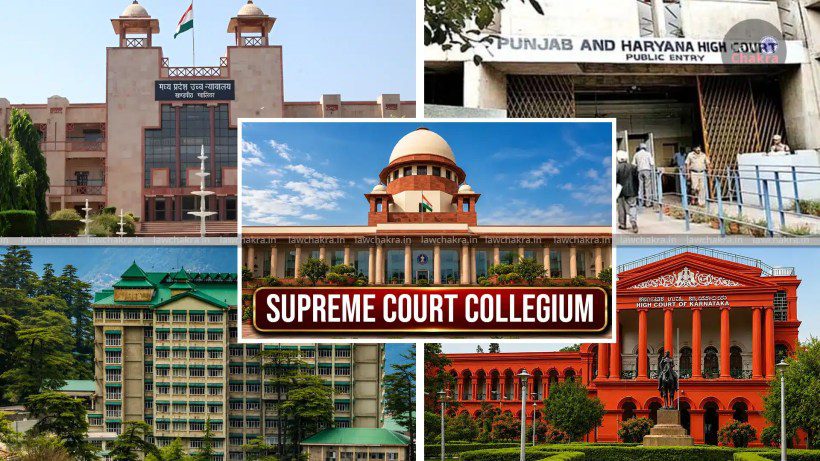
The Supreme Court Collegium on 3 June 2026 recommended seven advocates for elevation as Judges of the Karnataka and Madhya Pradesh High Courts — six for Karnataka HC and one for MP HC. The resolution, forwarded to the Union Government, also covered related appointments to the Punjab & Haryana High Court, putting the spotlight back on Article 217 and the Collegium System.
Constitutional Framework
Article 124 governs the appointment of Supreme Court judges, while Article 217 deals with appointment of High Court judges. Under Article 217, the President appoints HC judges after consultation with the Chief Justice of India, the Governor of the State, and the Chief Justice of the concerned High Court.
The Collegium System is judge-made law evolved across four landmark “Judges Cases”:
- First Judges Case — S.P. Gupta v UoI (1981): Executive primacy; “consultation” did not mean “concurrence”.
- Second Judges Case — SCAORA v UoI (1993): Reversed Gupta; “consultation” = “concurrence”; birth of the Collegium and primacy of the CJI.
- Third Judges Case — In Re Special Reference No. 1 of 1998: Clarified the Collegium as CJI plus the four senior-most SC judges.
- Fourth Judges Case — SCAORA v UoI (2015): Struck down the 99th Constitutional Amendment and the NJAC Act (which had inserted Article 124A) as violative of the Basic Structure — judicial independence being a basic feature.
Why This Matters For CLAT
- Static-meets-current: A live Collegium resolution is the perfect peg for static GK on Articles 124, 124A and 217.
- Basic Structure Doctrine: The NJAC verdict (2015) is a high-frequency CLAT/AILET passage topic; expect comprehension on judicial independence.
- Separation of Powers: Collegium vs NJAC debate tests your grip on checks and balances — a recurring Legal Reasoning theme.
- Map the 4 Judges Cases to year, ratio and constitutional consequence — exactly the trap CLAT sets in matching questions.
Key Facts At A Glance
| Item | Detail |
|---|---|
| Date of Resolution | 3 June 2026 |
| Recommending Body | Supreme Court Collegium (CJI + 4 senior-most SC judges) |
| Karnataka HC | 6 advocates recommended for elevation |
| Madhya Pradesh HC | 1 advocate recommended |
| Punjab & Haryana HC | 1 advocate appointed; 2 additional judges to be made permanent |
| Governing Article | Article 217 (HC); Article 124 (SC) |
| Struck-down Provision | Article 124A (NJAC) — 99th Amendment, 2015 |
| Landmark Cases | S.P. Gupta (1981); SCAORA (1993); SR1/1998; SCAORA (2015) |
Memory Trick — The 4 J’s
J-1981 Gupta = executive primacy → J-1993 Collegium is born → J-1998 CJI + 4 senior-most judges → J-2015 NJAC struck down (Basic Structure).
Practice Quiz — 10 CLAT-Style Questions
Click an option to reveal the answer and explanation.